

Storytelling is still what creates trust.
I’ve been thinking about how much easier it is to produce content than it was just two years ago. In the age of AI, you can outline a campaign in the morning, draft a blog before lunch, and publish a landing page before the day ends, but storytelling is still what makes any of it matter. What once required weeks of coordination across marketing, leadership, and subject matter experts now moves in hours.
For organizations and businesses under pressure, whether it’s revenue targets, donor engagement goals, or board expectations, acceleration matters.
At the same time, something else has shifted.
As production becomes easier thanks to AI, differentiation requires more discipline. The barrier to publishing has dropped, and the bar for clarity has risen. We’re competing less for space and more for belief. And belief, whether someone is choosing a partner or supporting a cause, is built on trust.
Most marketing teams are already using AI, and what matters now is whether strategic clarity is keeping pace with acceleration. When execution becomes efficient, differentiation depends on definition. It requires clear positioning, consistent narrative, and a point of view that can be expressed repeatedly without drifting.
This is the structure I keep coming back to:
- Storytelling builds trust.
- Trust drives engagement.
- UX determines whether the story is experienced clearly.
- Design determines whether the story feels credible.
- SEO determines whether the story is discovered.
- AI, including AI-driven search, determines how the story is amplified, interpreted, and surfaced.
Everything downstream reflects the strength of the narrative upstream.
Storytelling First
Organizations are doing meaningful work. They have strong programs, capable teams, and real impact. But when you ask what they want to be known for, the answers often vary depending on who is speaking.
Storytelling aligns internally before it is expressed externally.
It clarifies:
- The specific problem you are committed to solving.
- The stakes behind that problem.
- The outcome you consistently deliver.
- The perspective you’ve developed through experience.
Strong storytelling has edges. It reflects choices. It signals focus. That kind of clarity takes intention.
Can People Move Through the Story?
Once the narrative is defined, user experience determines whether people can move through it intuitively.
Thoughtful messaging can easily become buried under overloaded navigation, competing calls to action, and content blocks arranged without progression. The ingredients are there. The sequence isn’t.
Navigation often reveals the issue first. When menus reflect internal structures rather than audience priorities, visitors are left sorting instead of following. UX research consistently shows that as choices increase, decision time increases. More options create hesitation.
If you want to validate whether your navigation supports your storytelling, tree testing is a simple and revealing method. It tests whether users can find key information within your site structure before visual design even enters the equation. When people struggle to locate core services, programs, or resources, the issue is structural clarity, not copy. Tools like Lyssna or Optimal Workshop make this kind of testing accessible without a large research budget.
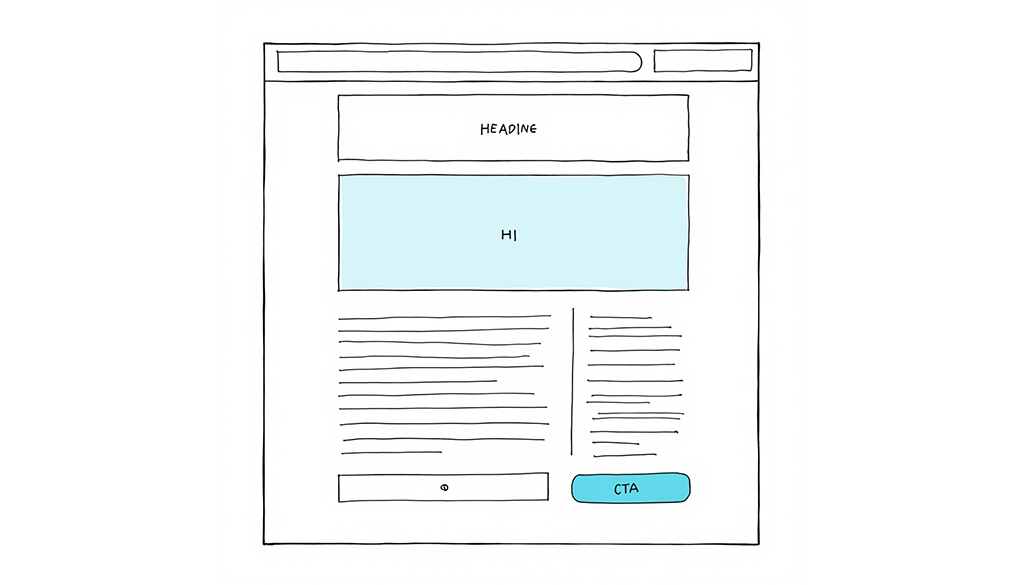
Page hierarchy reinforces direction. What to look for:
- Does your H1 communicate the central idea of the page?
- Do your H2s advance the argument?
- Is there a clear primary action?
Hierarchy signals importance. When structure aligns with narrative, the experience feels guided.
Clarity reduces cognitive load, and reduced cognitive load builds confidence.
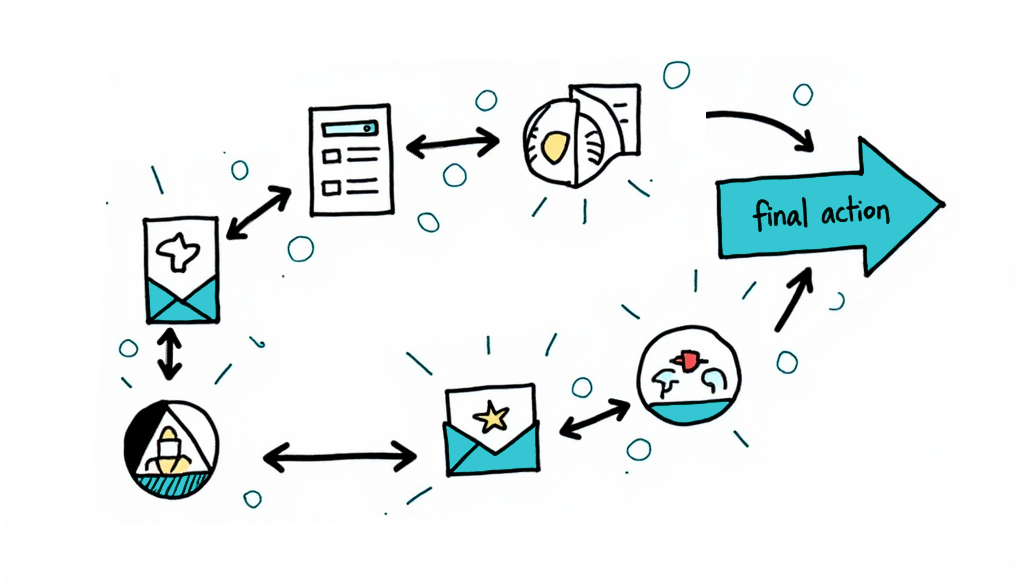
Storytelling in the Age of AI: Does the Experience Reinforce the Message?
Design shapes perception before a single paragraph is read.
Typography, spacing, imagery, and layout influence how credible and cohesive an organization feels. People may not be able to name what is working or not working, but they feel it quickly.
Imagery that reflects your actual audience creates resonance. Generic visuals tend to blur distinction over time. Inconsistent templates weaken confidence. Animation can support emphasis, but it should serve structure and guide attention, not distract from it.
You can test whether the design is reinforcing your story:
- Heatmapping and session recording tools, such as Hotjar and Microsoft Clarity, show you where attention actually goes. If users consistently miss what you consider your core message or primary action, your visual hierarchy is likely out of alignment.
- Scroll depth tracking reveals how far users move through a page. If most visitors do not move beyond the first section of a key page, your opening narrative may be unclear, or the layout may not be earning their attention.
- Five-second tests can be surprisingly revealing. If someone sees your homepage briefly and cannot describe what you do or who you serve, the issue is rarely copy alone. It is usually hierarchy.
- Accessibility tools such as Lighthouse or Axe help evaluate readability, contrast, and component consistency. These are credibility signals, especially for mission-driven organizations that serve broad audiences. When accessibility issues surface, they often point to friction that quietly undermines trust.
Design expresses hierarchy visually. It reinforces what matters most. It supports tone.
Intentional design builds confidence, and confidence builds trust.
SEO and AI Search, What the Data Should Tell You
Design shapes perception. Search shapes discovery.
Content is no longer just ranked in the age of AI. It is interpreted and synthesized by AI systems. That makes coherence measurable. Benchmarks vary by industry and intent, but consistent signals exist.
On core positioning pages:
- Engagement under 30 to 40 seconds often signals confusion.
- 60 to 120 seconds typically reflects meaningful interest.
Bounce rates to monitor:
- Under 50 to 60 percent is generally healthy.
- Sustained 70 percent or higher on strategic pages often indicates misalignment.
In Google Search Console:
- Keyword impressions should cluster around defined themes.
- Multiple pages competing for the same term dilute authority.
- Consolidated depth tends to outperform scattered breadth.
If traffic increases while conversions remain flat on high-intent pages, visibility may be outpacing persuasion.
When you consistently say the same things, in the same way, about the same core ideas over time, search engines begin to understand what you stand for. Patterns emerge. Authority compounds.
Your audience responds to that consistency as well. They remember you. They search for you by name. They associate you with a specific problem or perspective.
Clarity, repeated over time, builds recognition. And recognition builds trust.

The Age of AI Means Acceleration with Standards
AI tools accelerate drafting, iteration, and support structure.
The outcome depends on the framework guiding them.
Clear narrative pillars keep content focused, so be disciplined about terminology.
Search engines look for patterns. When your language shifts across pages, those patterns blur. When your language holds steady, your authority becomes easier to recognize. Reviewing overlapping content helps prevent dilution and keeps your focus clear.
That’s where guardrails matter.
- Define three to five narrative pillars and map your content to them.
- Choose your terminology carefully and use it the same way across pages.
- Consolidate overlapping content instead of expanding sideways.
- Refine sections that express perspective manually.
- Frame prompts around real audience intent, not just volume.
AI scales patterns. When your narrative foundations are strong, acceleration compounds your authority.
The Bottom Line
The tools will continue to evolve. Search will continue to change. AI will keep reshaping how content is discovered, interpreted, and surfaced.
What tends to remain constant is how people evaluate credibility.
They look for clarity in language. They respond to coherence across an experience. They notice when structure, design, and messaging feel aligned rather than assembled.
Storytelling in the age of AI, carried consistently through UX, design, and disciplined language, creates that alignment.
In a market saturated with content and increasingly mediated by algorithms, being understood is no longer automatic. It requires intention. It requires focus. It requires repetition with purpose.
Organizations that articulate what they stand for clearly and reinforce it over time become easier to recognize, easier to surface, and easier to choose.