

Are organizations still structuring websites as if visitors begin at the homepage, understand the organization, and navigate through the site in the order we intended?
Because when you actually think about how you use websites, that’s probably not what you do anymore.
Today, you Google something and land three pages deep. You click a link someone shared on LinkedIn. An email takes you straight to a report or an event, or maybe someone sends you a page and says, “Hey, this is what I was talking about.”
And now we have AI added to the mix.
Someone can ask ChatGPT, Google, Claude, or another AI tool a question and end up discovering a page, an article, a service, or even an organization they may not have known existed before. They didn’t start at your homepage, they didn’t read your About page first, and they haven’t learned what all your programs are called or how your organization is structured.
They just showed up.
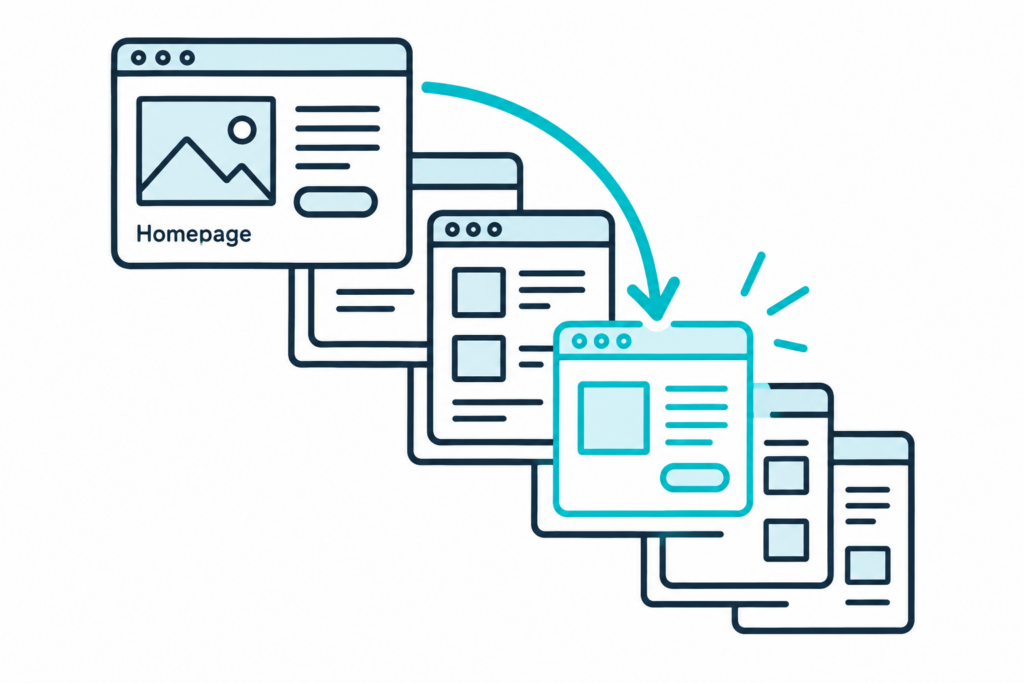
Which has me thinking that maybe we’ve put too much responsibility on the homepage and navigation to help people understand our websites. Don’t get me wrong, navigation still matters. A lot.
But if I land directly on a page three levels into your website, does that page make sense without everything that supposedly came before it? And when I’m finished, is there somewhere logical for me to go next?
That feels like a different website problem than simply asking whether the navigation is good.
AI Is Changing the Website User Journey, Too
I don’t think we need to completely reinvent websites because of AI. But I do think we need to rethink what we mean by a user journey. And this isn’t exactly fringe behavior anymore. According to Pew Research Center, 60% of U.S. adults say they read AI summaries at the top of search results.
We’ve traditionally mapped website journeys around how someone moves through the site. They land somewhere, learn about the organization, explore their options, dig deeper and eventually take some kind of action.
For a long time, a lot of website planning assumed a journey that looked something like this:
Search → Website → Navigate → Learn → Compare → Decide
Of course, real user journeys were never quite that tidy. But we could reasonably expect a lot of the learning and exploration to happen on the website.
AI can compress, rearrange, or even move some of those steps outside the website entirely. And we’re already seeing evidence of that in search behavior. In a Pew Research Center analysis, people clicked a traditional search result in 8% of visits when an AI summary appeared, compared with 15% when one didn’t.
A journey influenced by AI might look more like:
Question → AI Answer/Recommendation → Specific Page → Validate → Explore → Act
Someone may learn about you, understand what you offer, compare options, and form an opinion before they’ve visited a single page on your website. Or AI may introduce them to something much earlier in their thinking.
Either way, we can’t assume what someone already knows or what stage of their journey they’re in when they arrive.
Which makes understanding the user journey more important, not less. We just need to think about that journey as something bigger than the path someone takes through our website.
Gartner recently made a similar point from a marketing measurement perspective: traffic, conversions, and revenue still matter, but they increasingly tell us more about the outcome than the full path someone took to get there.
And I think that’s an important distinction for websites too. If part of the journey is happening somewhere else, looking only at what someone does once they reach the website means we’re starting the story halfway through.
Why Organizations Struggle to See the Website User Journey Clearly
I think one of the biggest challenges with working on your own website is that you know too much.
You know what all the acronyms mean. You know why one program sits under one department, and another sits somewhere else. You understand the difference between two service lines that probably sound almost identical to everyone outside the company. And after you’ve worked somewhere long enough, a lot of that just feels obvious.
Then it slowly makes its way onto the website. The navigation starts to resemble the organizational structure. Internal program names become labels. Someone wants a new item added to the menu because their initiative is important.
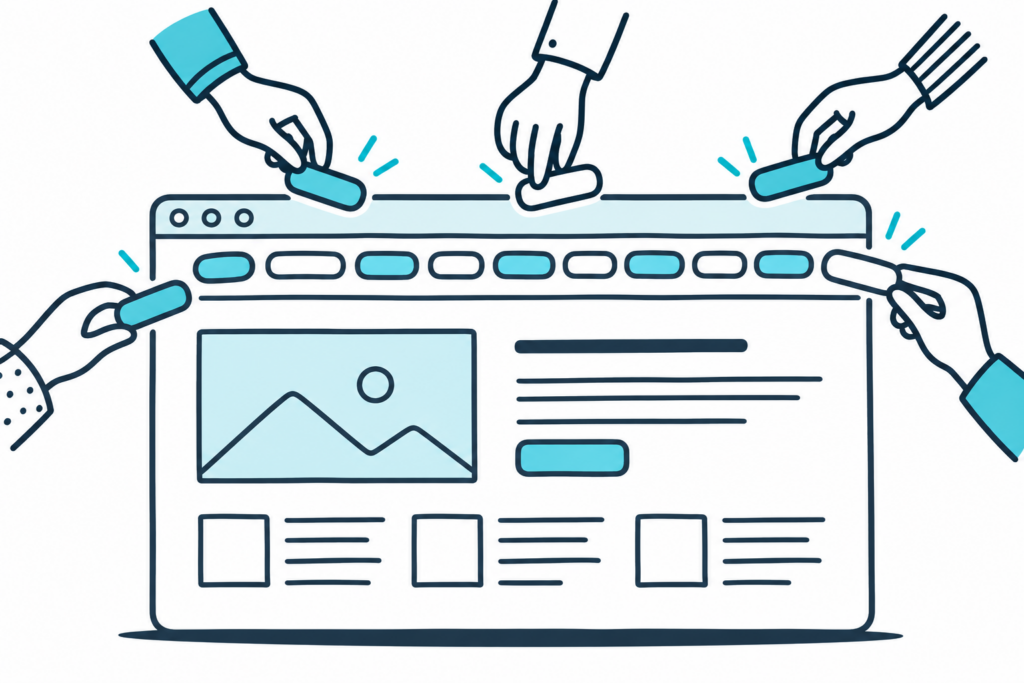
Individually, most of those decisions probably make sense. Collectively, you can end up with a website that requires people to understand your organization before they can use it. That’s a pretty big ask of someone who just met you 30 seconds ago.
So how do you get out of your own perspective?
Start with the user journey.
- Look at what people are actually searching for.
- Look at which pages they’re entering through, not just which pages get the most traffic.
- Talk to people who aren’t immersed in your organization.
- Watch someone try to find something without helping them.
And maybe most importantly, change the question.
Instead of:
“Where should we put this?”
Try:
“Where would someone expect to find this?”
Or even:
“Would they know to look for this at all?”
Those questions can lead you somewhere very different.
Not Every Page Needs to Be a Homepage
The answer isn’t to turn every page into a mini homepage or add a bunch of extra content everywhere just in case someone happens to land there first. The homepage and navigation still matter. But important entry and decision pages should make sense even when someone arrives without everything that supposedly came before them.
Understanding your website user journeys can help you figure out which pages deserve the most attention.
Look at your common entry pages, but don’t stop at traffic. Think about the pages that matter to your most valuable website user journeys, the places where people make decisions, and the pages tied most closely to what your organization needs the site to accomplish.
Those are the pages I’d look at first. You don’t need every page to tell your whole story. You need the right pages to do the right job for the person who just landed there.
And this isn’t just a content question. The information architecture underneath your website—the way content is organized, structured, labeled, and connected—has a big role to play in helping both people and machines understand what they’re looking at.
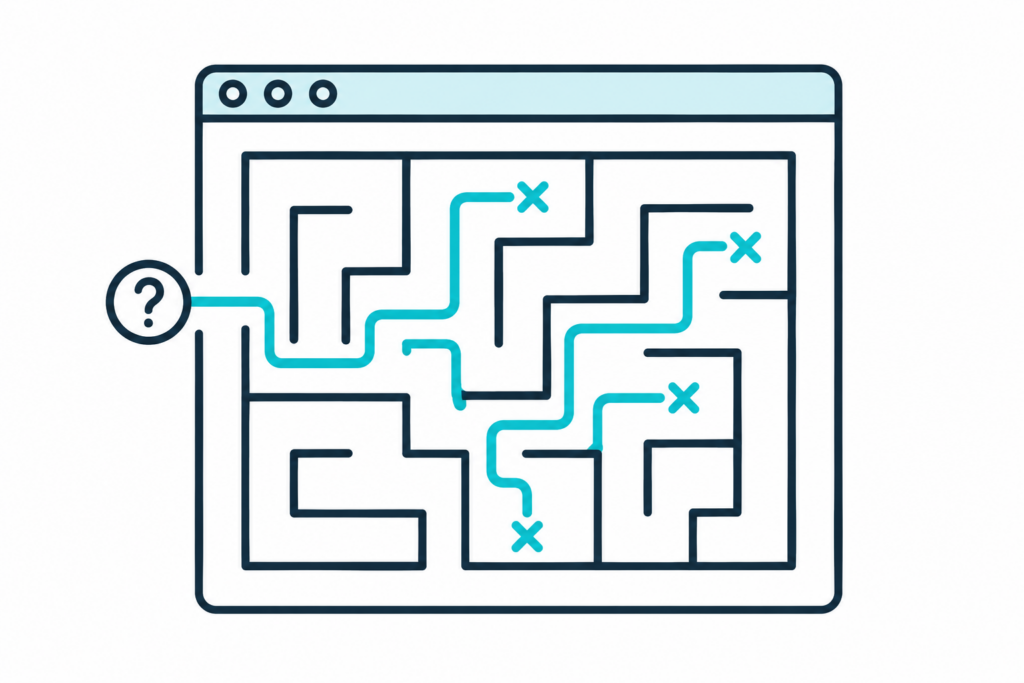
What This Means for Your Website
- Important landing pages need enough context to stand on their own.
- Internal terminology shouldn’t be required to understand a page.
- Related pages and next steps become more important when visitors enter deep in the site.
- Entry-page performance should be considered alongside traditional navigation and homepage behavior.
Try This: The Five Page Entry Test
You don’t need a site redesign to find out whether you have this problem.
Start with your website user journeys and pick five pages that matter. They might be common entry points, important decision pages, or pages someone needs to move through to accomplish something valuable.
Don’t pick the homepage.
Now pretend you don’t work there.
For each page, ask:
- Can you tell what the page is about?
- Would the language make sense if you didn’t already know the organization?
- Is there enough context for what you’re trying to do?
- Can you tell where you are?
- Is there an obvious place to go next?
Then, if you really want to make the exercise useful, give those pages to someone outside your organization and don’t explain anything.
Just watch. Pay particular attention to pages where someone can understand the content but doesn’t know what to do next. Those pages may be informative in isolation but still create a broken user journey.
I have a feeling that exercise could tell us a lot more about our websites than another hour spent debating what belongs in the main navigation.
Key Takeaways
- Website visitors increasingly arrive on specific pages without seeing the homepage first.
- AI can move discovery, learning, and comparison outside the website entirely.
- Important entry pages should provide enough context to make sense on their own.
- Clear next steps and connected content matter when visitors enter deep within a website.
- Testing a few high-value pages as standalone entry points can reveal website user journey gaps traditional navigation reviews miss.
Not Sure If Your Website User Journey Is Clear?
The best way to determine this is to take a step back and look at your site with fresh eyes.