
When results plateau and leadership starts asking questions, one common reaction is to blame the website. Someone will suggest a rebuild or redesign, and now that there’s a tangible solution, everyone agrees. It’s understandable. Redesigns feel decisive. They signal action. They give everyone something to point to.
But they can also be the wrong call.
Before you build the project plan and start winning over stakeholders, it’s worth asking a harder question: is the problem actually structural, or are you about to spend six to twelve months solving something that doesn’t require starting over?
When “Just Rebuild It” Is the Wrong Instinct
For marketing leaders with small teams, diminishing resources, and hefty goals, this choice has real consequences. The instinct to start over is understandable. It feels like a clear, decisive move. But choosing the wrong path is costly in ways that go beyond budget:
- Lost pipeline during a rebuild that drags on longer than projected
- Stakeholder fatigue from a project that promised transformation and delivered a refresh
- A new site that looks better but still isn’t converting or impacting the bottom line
This decision isn’t about aesthetics. It’s about risk, ROI, and how fast you actually need to move. The most expensive mistake isn’t choosing the wrong vendor. It’s choosing the wrong solution.
The Real Question: Is Your Problem Structural or Experiential?
Most underperforming websites have one of two types of problems. Getting the diagnosis right is everything.
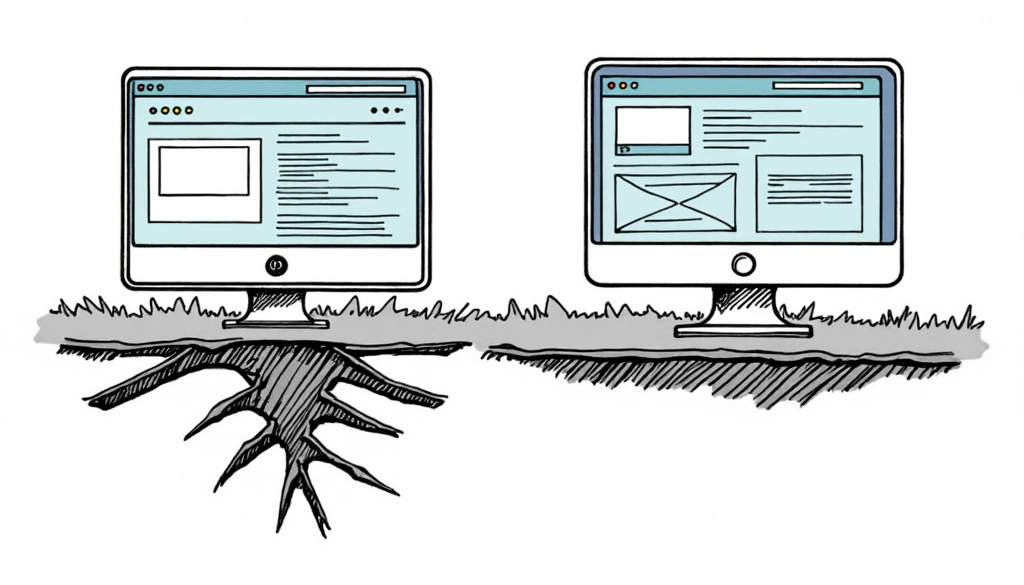
A structural problem means the foundation itself is the limitation. The platform can’t support what you need. The architecture is broken. The technical debt is so deep that no amount of surface-level improvement will move the needle. These problems genuinely require starting over.
An experiential problem means the platform is fine, but something about the design, content, or user journey is creating friction. People arrive but can’t find what they need. The brand expression feels off. Key pages aren’t converting. When your website is not converting despite steady traffic, the issue is almost always experiential rather than structural. These problems don’t require a teardown. Rather, they require targeted, intentional improvement.
The catch: experiential problems often get misdiagnosed as structural ones. And when that happens, organizations commit to a full rebuild, and all the cost, time, and risk that comes with it. Sometimes, a different approach could deliver better results in a fraction of the time.
Signs Your Problem Is Structural
A full rebuild is the right answer when the foundation genuinely can’t support what you need. That looks like:
- Your platform is old, outdated, unsupported, or fundamentally broken
- You’re going through a major rebrand or merger that requires a clean slate
- Structural or accessibility issues are severe enough that improvement would mean building on a bad foundation
- Multiple teams are blocked by a CMS that can’t support their work
- Your platform limits scalability, security, or your team’s ability to make changes
- Governance is broken across teams, and only a reset will fix it
If several of these are true, a rebuild isn’t overreach; it’s the right call. The goal isn’t to avoid redesigns through building new. It’s to make sure you’re solving the right problem before committing to the most expensive version of the answer.
Signs Your Problem Is Experiential
This is where most organizations actually find themselves, and where the mismatch between problem and solution is most common. Your site has an experiential problem if:
- Your website is getting traffic but not converting visitors into leads
- Users can’t find what they need, or the journey is confusing
- The brand expression feels inconsistent or outdated, but the platform works
- You need results this quarter, not next year
- Your CMS still supports what you need
- Your brand is stable for the next two or more years
If this list sounds familiar, starting over isn’t just unnecessary. It can actively delay improvements that would actually move the needle. The problem isn’t the foundation. It’s the experience being built on top of it.
Common Mistakes Marketing Leaders Make with a Redesign
These aren’t edge cases. They happen on nearly every project that goes sideways.
- Redesigning without performance data
If you don’t know why your site is underperforming, a redesign is a guess. An expensive one. - Treating UX as visual design
Your website not converting after a redesign is more common than most marketers realize. A new coat of paint won’t solve a UX problem. - Measuring success by launch, not outcomes
Launch day is not the finish line. The real question is what happens to the pipeline in the 90 days after. - Ignoring accessibility and governance
These are usually the first things cut in a tight timeline and the first things that cause problems post-launch. - Starting over when iteration would outperform
The most common mistake of all. And the most expensive.
Rebuild or Redesign? How to Diagnose What Your Website Actually Needs
At Culture Foundry, we don’t start with “rebuild or not.” We start with what’s blocking growth. That means looking at four dimensions before recommending a path:
- UX and conversion friction: Where are people dropping off, and why?
- Platform constraints: Is the CMS actually limiting what’s possible?
- Governance and accessibility risk: Is the current setup creating liability?
- Measurement gaps: Do you even have the data to know what’s working?
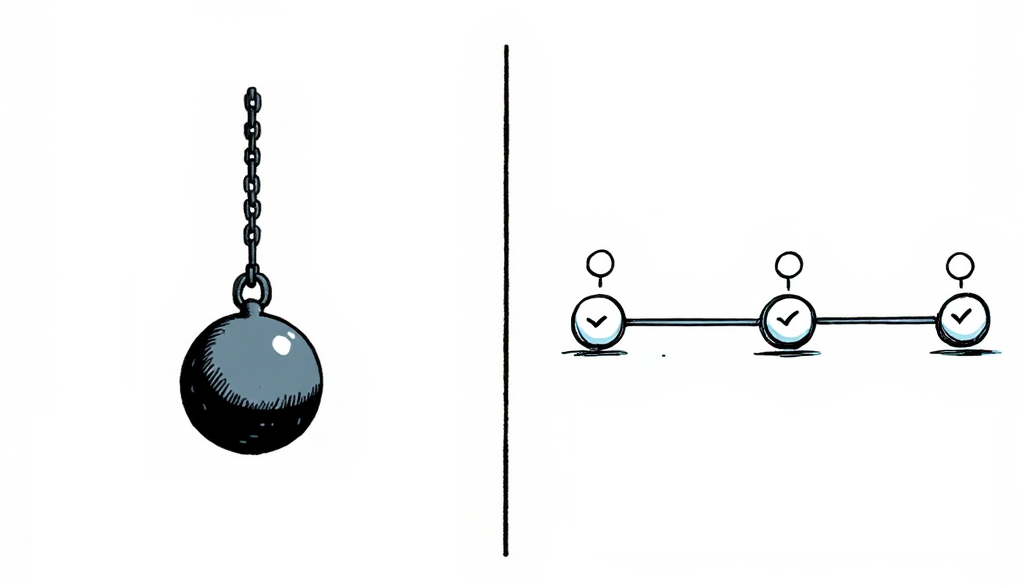
Sometimes the answer is targeted, phased improvements to what’s already there. Sometimes it’s a rebuild. Or it could be something in between: a rolling redesign that starts improving the highest-impact sections of your existing site immediately, without waiting for an all-at-once relaunch that may be months away.
The point isn’t to avoid redesigns. It’s to make sure you’re solving the right problem before you commit to the most expensive version of the answer.
Not Sure Which Path Is Right?
The fastest way to know is to assess what’s actually holding your site back.