
Your site isn’t bad. It’s just not working hard enough. Traffic is okay. Leads are inconsistent. Some pages perform well; others feel like they belong to a different company. Leadership keeps asking about the website. You keep “looking into it,” but haven’t been able to identify an obvious problem.
A full website rebuild feels like the obvious solution. But a full redesign also means 12 to 18 months of runway, a significant budget commitment, and the very real possibility that by the time the new site launches, your priorities have shifted. And so the website rebuild stays on the roadmap. In theory. While the site continues to underperform.
There’s an option that most marketing leaders don’t know to ask for. It’s called a rolling redesign. For organizations whose sites are fine but not performing, it’s often a better answer than either a website rebuild or another year of maintenance. A rolling redesign is a phased approach to improving UX, content, and performance over time, instead of relaunching your website all at once. It reduces risk, delivers faster results, and spreads budget investment.
Your Options, Plainly Explained
Before making the case for each approach, it helps to be clear about what both actually mean.
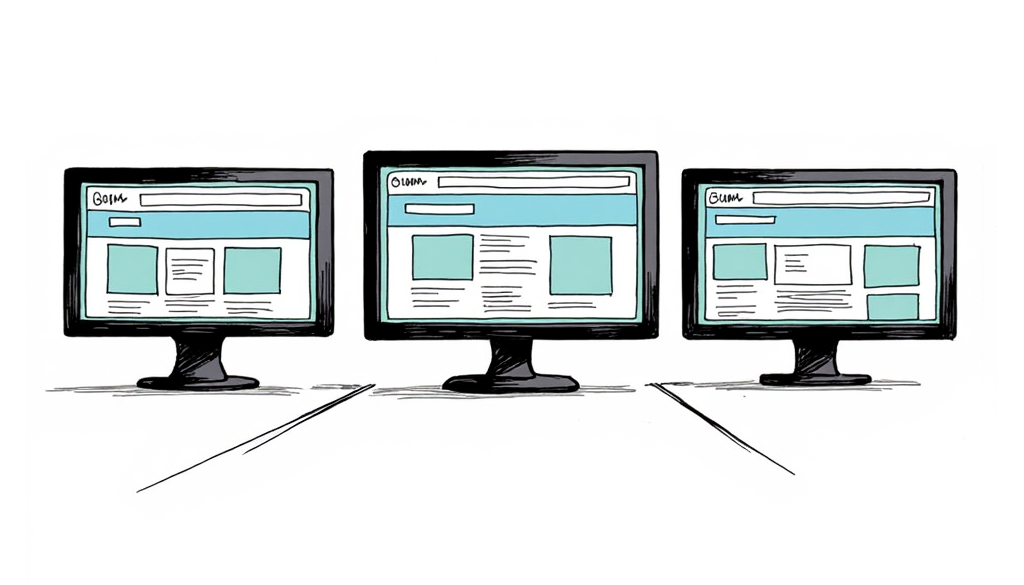
A full website rebuild is a large, one-time project: you plan, design, and launch a new site in a single major release. It typically takes 9 to 18 months, touches brand, UX, content, and technology all at once, and happens every three to six years. It’s a significant investment front-loaded into a single bet.
A rolling redesign accomplishes the same goal, but in phases. You break the scope of the full redesign into a series of smaller, planned releases over 3 to 6 months. You ship value continuously, section by section and feature by feature, instead of waiting for a single launch day that may be a year away.
Same destination. Very different journey.
Why a Full Website Rebuild Is a Harder Sell to Leadership Than It Used to Be
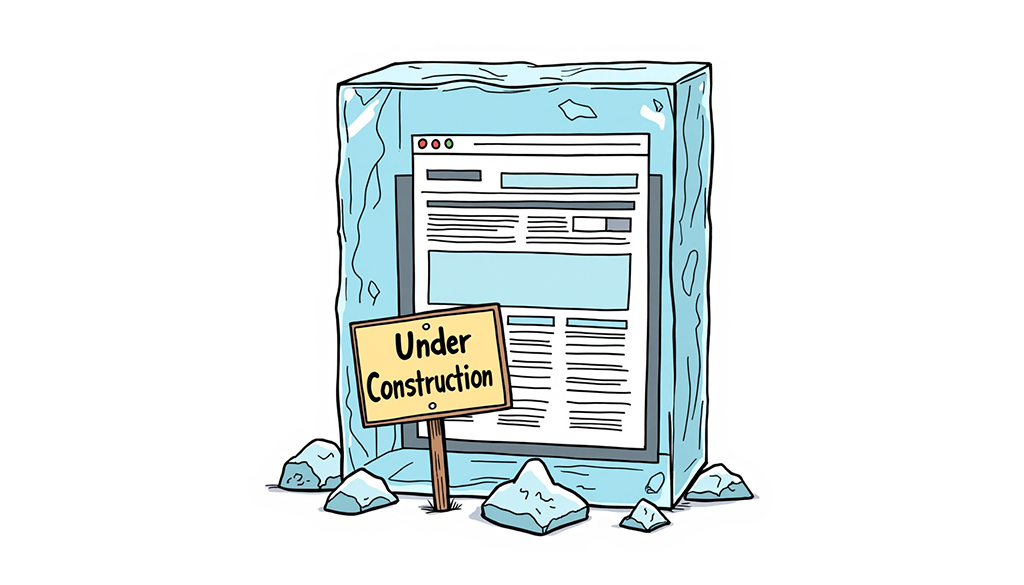
A full website rebuild made more sense when the web moved more slowly. You could invest in a new site, ride it for five years, and relaunch your website all at once when it aged out. That model is harder to justify now, not because website rebuilds are wrong, but because the assumptions underneath them have changed.
Your business doesn’t stand still for 18 months while the site is being built. Your messaging evolves. Your product mix changes. Your competitive landscape shifts. By the time a completely redesign, rebuild and relaunched site hits the internet, it reflects decisions made a year ago.
There’s also the risk profile to consider. A big-bang launch concentrates every risk into a single moment. SEO can dip. Conversion can drop while users adjust. If something fundamental was misaligned — a navigation assumption, a content hierarchy decision, a CTA strategy — you often don’t find out until after launch, when fixing it requires another project cycle.
That’s not an argument against a full-scale website rebuild. There are situations where they’re the right call: a major rebrand, a merger, a platform that genuinely can’t be modernized incrementally. But for sites that are underperforming rather than broken, a big website rebuild is often more risk and more disruption than the problem warrants.
What a Rolling Redesign Actually Looks Like
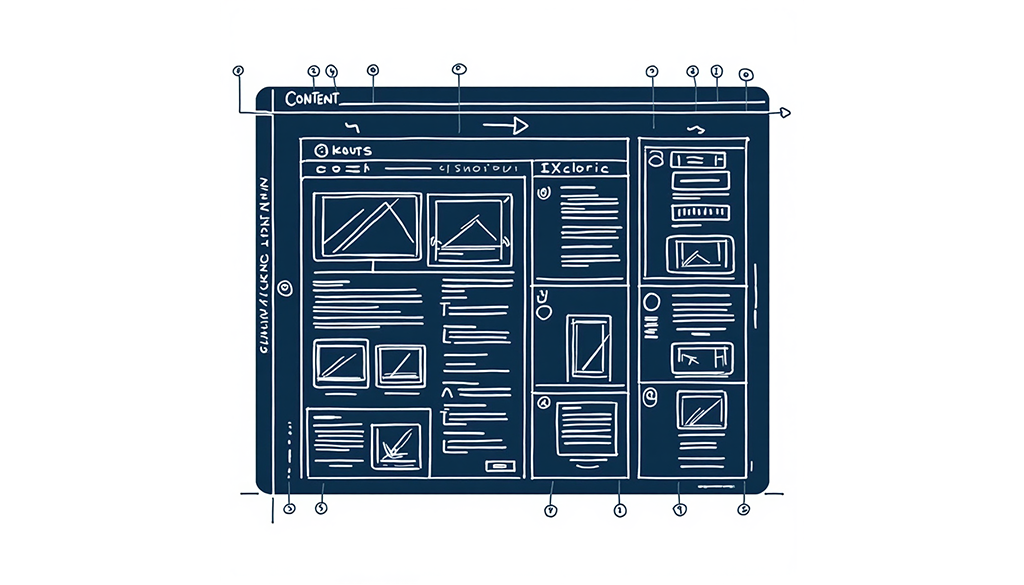
Unlike a full website rebuild, a rolling redesign starts with a roadmap, not a launch date.
The work begins with a clear-eyed audit of where your site is underperforming and why.
- Which pages have the most traffic
- Which pages are of strategic importance?
- Which pages are not performing as well as they used to?
- Where are users getting confused?
- Is your design sending mixed messages?
That analysis will produce a prioritized roadmap of improvements. Turn that into a plan. Order it by impact. Sequence it by dependency. Phase it into releases that can be planned and budgeted.
Then you start shipping. Not everything at once. The highest-impact work first.
Maybe that’s the front door of your site: the homepage. Or it’s the navigation that sets the context for everything that follows. Maybe it’s a key landing page, where the gap between traffic and conversion is highest. Maybe it’s reorganizing content on a high-traffic section that’s also reporting a high bounce rate.
Each phase has defined goals and measurable KPIs. Metrics like conversion rate, time on task, Core Web Vitals, or lead volume. You launch the change. You measure the impact. You learn, and then you adjust the next phase based on what you find out. The roadmap is a living document, not a contract. It evolves as you learn more about what your users actually need.
Over the next few months, the cumulative effect is a site that has been meaningfully improved across every dimension without a freeze, a big-bang launch, or a year-long wait before anything gets better.
The Comparison That Matters
Here’s how the two models compare on the dimensions that matter most to a marketing leader:
| Rolling Redesign | Full Website Rebuild | |
| Time to first results | Weeks to a few months | 9–18+ months |
| Budget pattern | Predictable, spread over time | Large, concentrated up front |
| Risk profile | Lower, because you test and adjust as you go | Higher, because a single launch concentrates risk |
| Impact on your team | Iterative decisions, manageable change | Heavy up-front involvement, intensive launch period |
| Strategic impact | High, as you compound improvement over time | High, if your original assumptions are right |
| Best for | Sites that are underperforming but not broken | Major rebrands, mergers, legacy platform replacement |
The ROI Difference
The financial case for a rolling redesign comes down to when value arrives and how risk is distributed.
A total website rebuild asks you to make a large, concentrated investment and wait. The ROI may appear as a spike. If the launch hits the mark, performance improves meaningfully. If it doesn’t, you’ve spent the budget, and you’ll need to plan another cycle.
A rolling redesign builds ROI as a curve. When you focus on the pages and journeys where improvement translates most directly into leads and revenue (the highest-impact work), you start seeing measurable gains right away. Each phase is measured, which means you’re not guessing about what’s working. And the learning from each phase informs the next, compounding over time.
When a Website Rebuild Is the Better Strategic Move
Everything above makes a strong case for a rolling redesign, and for the right situation, that case holds. But there are scenarios where a more traditional website rebuild is the right answer. And recommending the wrong model doesn’t serve anyone.
Your brand has fundamentally changed. If your organization has rebranded, merged, pivoted its business model, or emerged from a significant strategic shift, the existing site isn’t just underperforming. It’s actively misrepresenting you. A rolling redesign improves what’s there. It can’t rebuild the foundation when the foundation itself is wrong. When every page of your current site tells the wrong story, incremental improvement is the wrong tool.
Your platform can’t get you where you need to go. Some sites are built on technology that can’t be reasonably modernized in phases. Legacy platforms, heavily customized CMS environments, or architectures that have accumulated years of technical debt sometimes reach a point where the cost of working around the problems costs more than starting over. If your developers are spending more time fighting the platform than building on it, that’s a signal worth taking seriously.
You need a visible moment of change. Not every website decision is purely analytical. Sometimes an organization needs a clear before and after, a rallying point for leadership, a signal to the market that something has meaningfully shifted. A merger announcement. A new CEO’s first major initiative. A market repositioning that needs a credible public moment. A rolling redesign produces steady, compounding improvement. It doesn’t produce a press release.
Stakeholder alignment requires a clean slate. Occasionally, the politics of an organization make incremental change harder than a single decisive project. If every proposed improvement triggers a committee, if legacy decisions have calcified into territorial disputes, or if the only way to move forward is to take everything off the table and start fresh. A complete teardown and website rebuild could be the organizational reset that makes progress possible.
The honest framing is this: a rolling redesign is the better default for most organizations in most situations. It’s lower risk, faster to value, and better suited to a web environment that doesn’t stand still. But “better default” isn’t the same as “always right.” If your situation involves any of the scenarios above, the smarter move is to say so upfront rather than force a rolling model onto a problem it wasn’t designed to solve.
The best partners will tell you which one you actually need, even when the answer is the harder, more expensive one.
How to Know Which Model Fits Your Situation
Choose a rolling redesign if:
- Your site is generating traffic but underconverting
- You need to show progress and results without waiting for a full relaunch
- Your organization values data-driven decisions and can work iteratively
- Your budget is better suited to a sustained monthly investment than a large lump sum
- You’ve been putting off a website rebuild because the timing never feels right
Choose a full website rebuild if:
- Your current site is fundamentally misaligned with your brand, your business model, or your technology needs
- You’re going through a major rebrand or merger that requires a clean slate
- Your platform is too legacy to modernize incrementally
- You have organizational support for a large, time-boxed project and need a visible “line in the sand” moment
One note worth adding: these models aren’t mutually exclusive over the life of a site. Many organizations do a complete teardown when a clean slate is genuinely required, then transition into a rolling redesign model. The question isn’t which model is best in the abstract. It’s which one fits where you are right now.
The Quiet Cost of Waiting
The hardest part of this conversation is making the status quo visible.
A site that’s underperforming but not broken is easy to deprioritize. The damage is distributed across small annoyances: a conversion rate that could be higher, leads that don’t come in, a brand experience that doesn’t quite match the company you’ve become. Nothing is failing loudly enough to force a decision. And so the decision gets deferred, quarter after quarter, while the gap between what the site is doing and what it could be doing quietly widens.
A rolling redesign can stop this. It gives you a path to meaningful improvement that doesn’t require a full website rebuild budget, an 18-month timeline, or a high-stakes launch day. It turns the website from a deferred project into a marketing asset. It becomes a tool that’s always getting better, always being measured, and always working harder for your business.
If your site is fine but not performing, that’s not a reason to wait. It’s a reason to start.
Want to talk through if a full website rebuild or a rolling redesign fits your situation? Let’s start the conversation.