

A project to redesign, rebuild and relaunch your website can dramatically change your organization’s trajectory for the better.
Unless the process kills you first.
Which is to say that rebuilding a website from scratch is really hard. It can go sideways, exhaust your organization, and even ultimately fail to launch. Success requires great design and development, crackerjack project management, and tight organizational alignment. It also often requires lots of new or reworked content, all centered on an “all the marbles” launch with a ticking-clock deadline.
I bet you can’t wait to get started, huh?
What Is a Rolling Redesign?
A rolling redesign is a website redesign approach where improvements are launched section by section, starting with the areas with the highest potential return, rather than rebuilding and relaunching your entire site at once.
The good news is that there is another way, a sneaky smart one that we’ve increasingly utilized as an alternative to forge a better — and significantly less taxing — path to a refreshed website: the rolling redesign.
How a Rolling Redesign Works
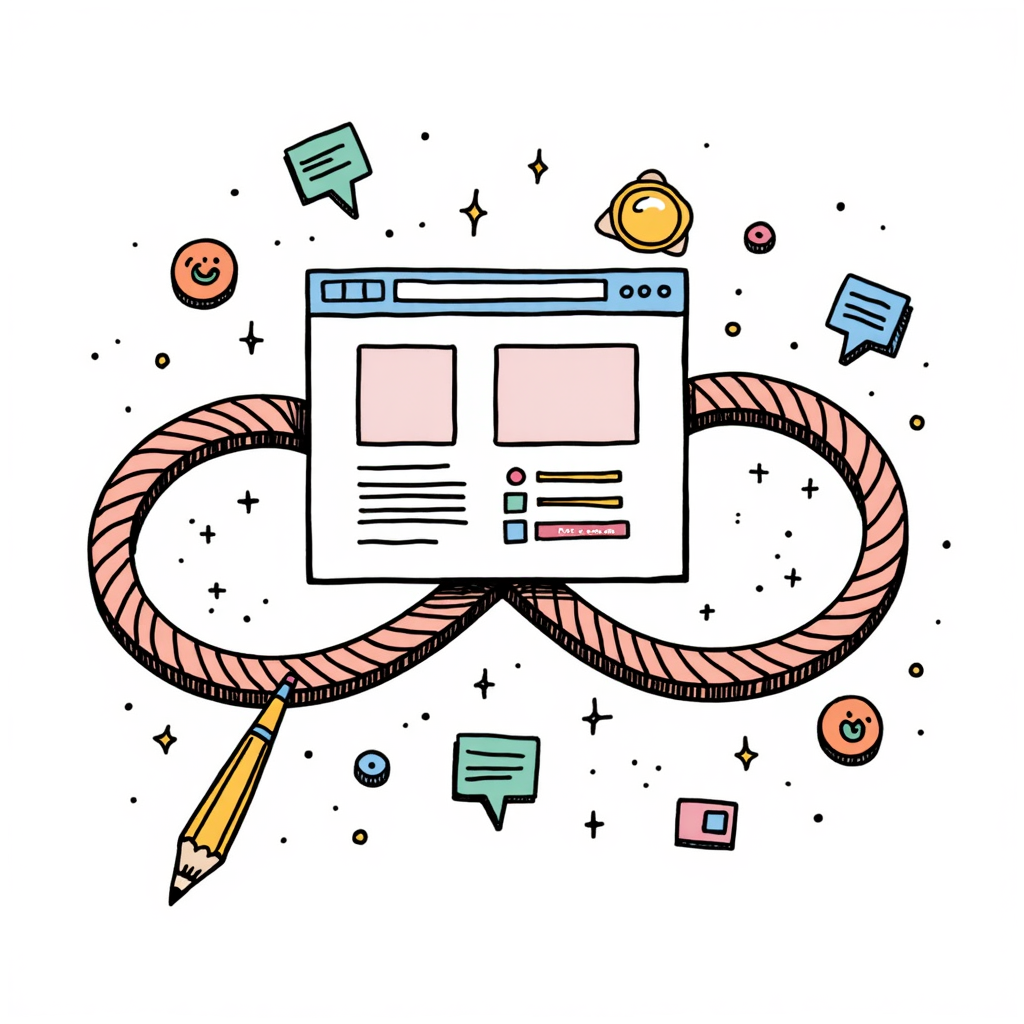
With a rolling redesign, instead of relaunching your website all at once, we launch improvements section by section.
We start where the gap between the existing experience and the potential experience presents the ripest opportunity for immediate ROI.
Consider your website that’s due for a refresh. Everyone’s very over the exiting site, but does it really need to be a complete teardown?
If you could start by improving just one area of the site, what would it be?
- The home page?
- The services section?
- Another key juncture of the conversion journey?
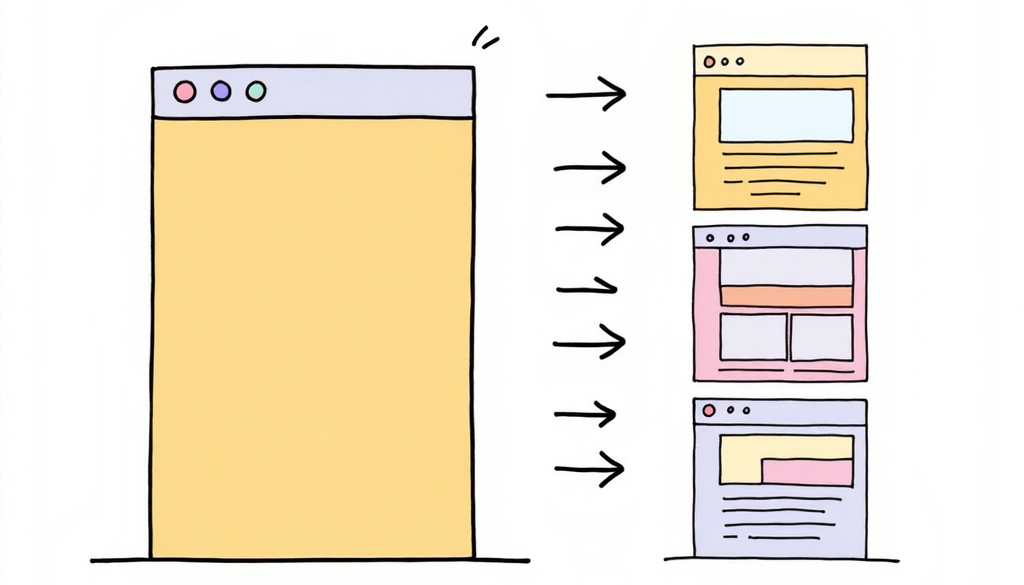
With a rolling redesign, you stack up those opportunities in a priority list, then start stacking wins, launching the refreshed areas one at a time.
By the time you’ve worked your way around the site, you end up at the same place a total-rebuild process would have landed you: a completely refreshed website, but with far less strain along the way.
Benefits of a Rolling Redesign
Other benefits of the rolling redesign include:
- Earlier evidence of forward progress
- Greater ability to read (and react to) user feedback
- A more amortized budget
If continuous improvement is a core value of the organization and the initiative, the rolling redesign is typically ongoing. Agile organizations are always evolving, and there is always something to make better on the website as a result.
When a Rolling Redesign Doesn’t Make Sense
So why wouldn’t you do a rolling redesign?
There is one key prerequisite: a solid technical foundation.
If your site is on the latest (or near-latest) version of WordPress or Drupal, you’re likely a candidate.
If your site is several versions back or locked into a page builder such as:
- Elementor
- WPBakery
- Divi
…a total rebuild is likely required.
Real-World Rolling Redesign Examples
Where have we applied rolling redesigns? Three examples illustrate the effect:
ImageSource
ImageSource is a highly dynamic organization, and the second an improvement rolls out, the discussion turns to how it can be made even better.
Our rolling redesign of the ImageSource website moved section by section, starting with the highest impact areas:
- Home page
- ILINX Platform section
Uplifts of other sections such as Smarts and Company coming later in the process. A clear design direction rooted in ImageSource’s brand strategy served as the north star throughout.
24 Hour Fitness
Our partnership with 24 Hour Fitness has followed a similar path, with a focus on delivering improvements to key points of the conversation path:
These improvements were delivered sequentially rather than all at once, and with a keen focus on performance of those improvements at every juncture.
Culture Foundry (Our Own Site)
Finally our own Culture Foundry website, often stuck in the “cobbler’s kids” conundrum, has benefitted from this approach.
The first focus form our latest rolling redesign round: a Work section front that replaced an increasingly unwieldy a-to-z client list with a more focused experience filterable by:
- Industries
- Services
- Technologies.
Next up was a new Services front. The next improvement is in flight, because with a rolling redesign, improvement is now a constant.
Rolling Redesign vs. Total Website Rebuild
The bottom line: When planning a website redesign, before you embark on a total teardown approach, consider whether a rolling redesign is a viable alternative.
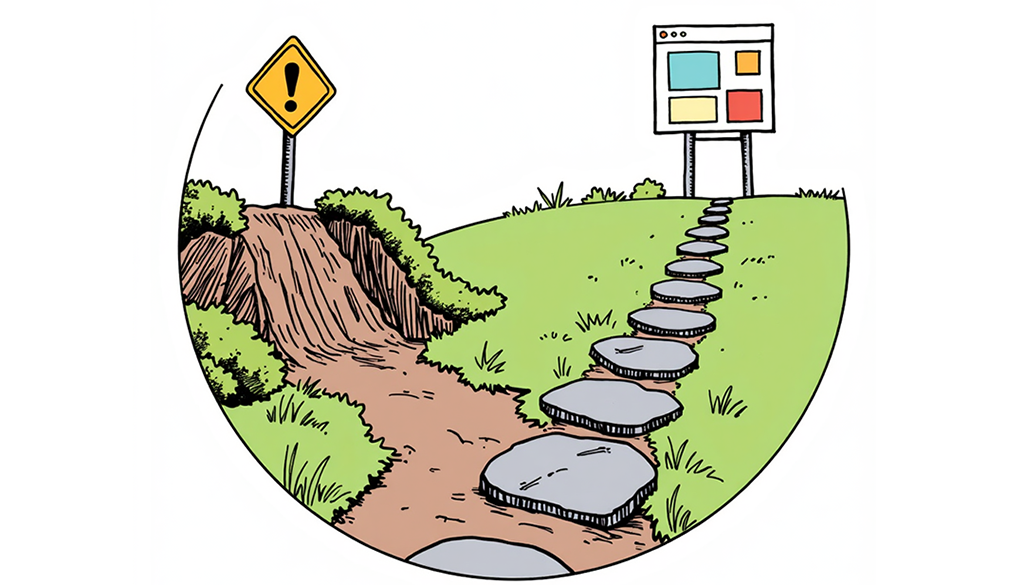
Both paths can lead to a refreshed website, but they differ dramatically in risk, pace, and organizational strain.
Key Takeaways
- A rolling redesign incrementally improves your website
- Strategic design changes reduce risk, distribute budget over time, and demonstrate progress earlier
- An agile design approach works best on modern, flexible CMS platforms
- Not every website is a candidate for a rolling redesign: technical foundations matter
- Rolling redesigns support continuous improvement, not one-time launches
Is a Rolling Redesign Right for Your Website?
If you’re not sure whether your site is a good candidate, reach out to our team. We’d be happy to take a look and help you explore your options.