
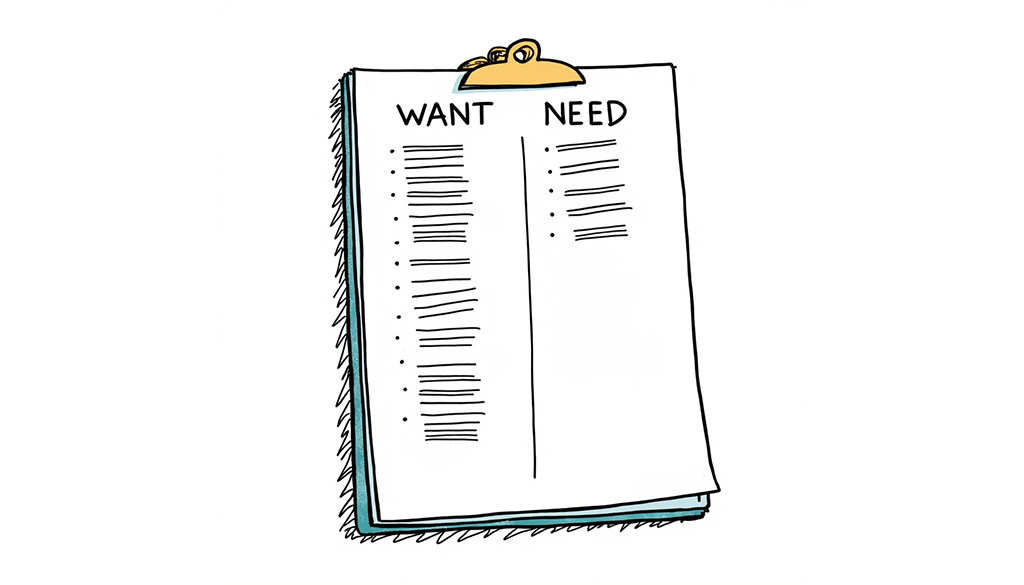
When website projects start, especially in early ideation, the wish list grows quickly. It’s like making a birthday list without a budget. Do I want an Owala bottle in every color? Absolutely. Do I need that? Probably not. And honestly, it’s much easier to keep adding fun things than to carefully reflect on items that would be useful.
In digital projects, it works the same way. Adding things is easy, being thoughtful comes with its own challenges. A new page type seems harmless. An extra feature feels manageable. Another template might come in handy. That blog you might write someday starts feeling like it needs its own structure. That one piece of user feedback you heard once suddenly becomes a requirement. You heard about a great plugin from a friend over coffee. Why not add it?
None of these decisions are unreasonable on their own. Taken together, though, they are often what make a website project slower, more expensive, harder to maintain, and ultimately less effective than it should be.
That is why there is such a strong case for building fewer things better.
Here’s the short version:
- More website features and templates do not automatically create more value
- Larger scope often reduces focus, increases complexity, and slows delivery
- Every additional component, template, or feature creates ongoing maintenance responsibility
- A smaller, better-built system is often easier to use, easier to scale, and more effective over time
- Strong website projects prioritize what matters most instead of trying to do everything at once
A good website is not defined by how much it includes. It is defined by how well it works and the results it delivers to the business.
More Scope Creates More Complexity, Not Always More Value
In digital website projects, more can feel safer. More templates, more modules, more functionality, more options for every possible scenario. It can sound strategic, flexible, even efficient, because there is often a belief that building more now will save time later.
Usually, that is not what happens.
Every addition creates more decisions, more dependencies, more review cycles, more implementation details, and more long-term upkeep. It also creates more opportunities for inconsistency, underuse, editorial confusion, and maintenance burden. That complexity rarely arrives all at once. It builds gradually through individually reasonable asks: one more layout, one more feature, one more exception, one more template because this page is just a little different.

That is how website projects get harder to deliver and harder to sustain.
A bigger website is not automatically a better one. In many cases, the highest-value work is not adding more. It is identifying what matters most and doing that work exceptionally well.
And this is not just an internal team issue. It affects the user experience too. More options do not automatically make a website more useful. If Google Maps gave you fifteen routes every time because more must be better, it would be unusable. Clarity is what helps people move forward.
In Website Projects, Smaller Systems Are Often Stronger
Website projects built around a smaller set of thoughtful templates, components, and workflows are often more effective than a larger system full of one-off solutions. Not because smaller is inherently virtuous, but because focused systems are easier to understand, easier for editors to use, easier to keep consistent, and easier to maintain over time.
This matters even more for lean marketing and digital teams, which is to say, most teams. Most internal teams do not need dozens of highly specific page-building options. They need a system that helps them publish confidently, move efficiently, and support actual business goals without unnecessary friction.
One strong template can support a surprising amount of content. Dozens of templates usually do the opposite. They fragment the system, muddy the hierarchy, and create more opportunities for inconsistency.
A simpler system is not a lesser one. In many cases, it is the more mature one.
When Teams Try to Do Too Much, Quality Drops
This is the part that gets underestimated. When the website project’s scope keeps expanding, quality almost always pays for it if the budget can’t absorb the changes.
Teams have less time to think, less time to refine, and less time to do the most important things well. You end up with more deliverables, but less depth.
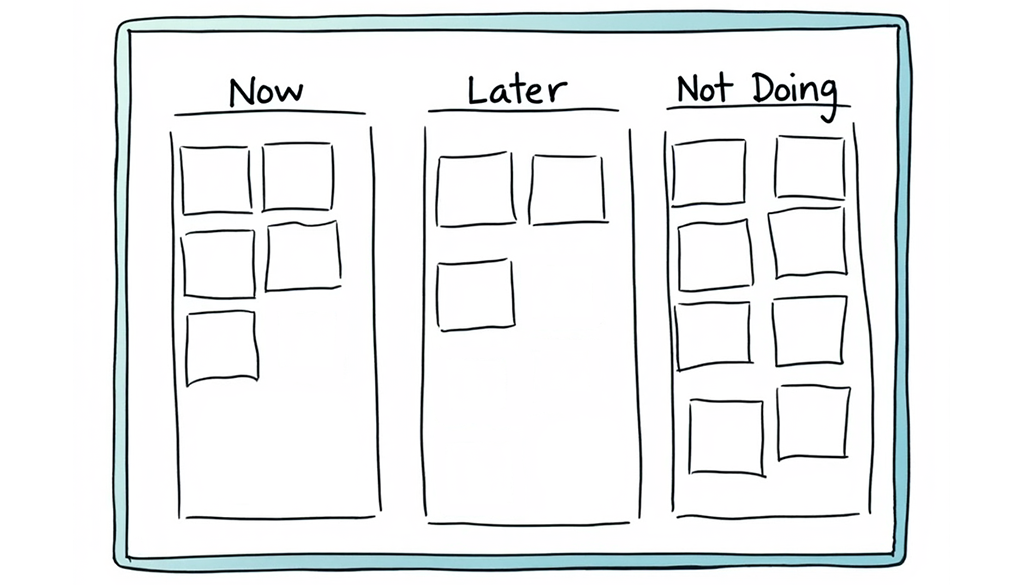
That is why prioritization matters so much. The strongest website projects, and project managers, are not the ones that say yes to everything. They are the ones that get honest about what matters now, what can wait, and what is not worth building at all.
That does not mean the brainstorm should be small. It should not. We want the ideas, the edge cases, and the stakeholder context. We want to hear what people are worried about, hoping for, and trying to solve. But the value is not in collecting all of that. The value is in translating it into something useful, knowing what supports the goals, what earns its place, and what is simply noise dressed up as importance.
Not every edge case needs its own feature. Not every future possibility needs to be solved in phase one. Not every stakeholder request needs to become a permanent website fixture.
Good prioritization is not about being rigid or dismissive. It is about protecting value.
Building Fewer Things Better Creates More Room to Grow
One of the more persistent misconceptions in website projects is that building less upfront limits future growth. Usually, the opposite is true.
When you build a smaller system thoughtfully, with strong structure and clear priorities, you create a foundation that can grow cleanly over time. When you build too much too quickly, you create clutter, confusion, and technical or editorial debt that makes future growth harder.
That is the difference between less and underbuilt.
Building fewer things better does not mean cutting corners. It means investing where it matters, avoiding one-off complexity, and leaving room for future phases based on real needs instead of hypothetical ones. That is a healthier way to scale.
The goal is not to build the most things. It is to build the right things well, in a way that supports the business, the user, and the team who has to live with the site after launch.
Key Takeaways
Building fewer things better leads to stronger website project outcomes because it reduces complexity, improves usability, lowers maintenance burden, and gives teams more time to focus on what actually drives results. In most website projects, more features do not create more value. Better prioritization does.
- More website features do not automatically create more value.
- Scope creep often leads to slower delivery, lower quality, and higher maintenance costs.
- Smaller website systems are usually easier for teams to manage and easier for users to navigate.
- Building less upfront does not limit growth when the foundation is structured well.
- The best website projects prioritize what matters now instead of trying to solve every possible future need.
Planning a website redesign? Talk to Culture Foundry and we’ll help you simplify the scope before complexity slows your project down.