

Redesigning your website is exciting, but it can go off the rails fast if your content readiness isn’t where you think it is. What this means: your content isn’t ready to deliver.
It happens all the time: Teams jump straight into design and development only to hit delays and scramble for missing content. It’s like starting to cook dinner before checking what’s in the fridge; halfway through, you realize you’re out of key ingredients and have to improvise.
The truth is, content drives design, not the other way around. If you want your website redesign to succeed, start with the words, visuals, and stories that fuel it. Take stock of what you have, decide what stays, what needs a refresh, and what’s missing. When you begin with a clear content readiness plan and content strategy, your redesign runs smoother, faster, and with far fewer surprises.
Good UX and design can increase conversions by up to 400 percent (source: Forrester), but that only happens when the underlying content is ready to support it. Without content alignment, even the most beautiful web design cannot deliver its full impact.
Begin with an Honest Content Audit
The simplest and most effective way to prepare for a website redesign is with a Review / Refresh / Remove (R³) content audit. By crawling your existing site and organizing the content into a spreadsheet, you can evaluate every page and decide what to review and keep as-is, what to refresh with updates, and, crucially, what to remove because it’s no longer serving your goals.
This exercise goes beyond logistics; it shapes your entire content strategy. Without it, teams underestimate the scope of work and hit roadblocks mid-project. With it, you gain visibility into the true size of the task, prioritize your team’s effort, and build momentum with confidence.
Example: One client completed a redesign before developing their content. When they later tried to retrofit the content into the existing design, it caused significant time and budget overruns. After the content was finally written, it became clear the design needed another round of revisions to properly fit the new material.
💡 PRO INSIGHT: Don’t limit your audit to copy. Include PDFs, blog tags, resource libraries, videos, and forms. These assets often hide content debt that can derail your launch timeline. This kind of holistic view is at the heart of true content readiness for your website redesign.
Auditing as a Branding Exercise
A content audit is also a brand health check and a core step in achieving content readiness before your redesign. It reveals whether your messaging still reflects who you are today. Think about how brands like Nike continuously evaluate campaigns to ensure every ad, product story, and social post embodies their values and tone. Your website deserves that same discipline.
If your design evolves but your content lags behind, visitors will feel the disconnect. The audit gives you a chance to realign your brand voice, tone, and storytelling so your site reflects the organization you’ve become, not the one you were five years ago. This realignment is a key outcome of content readiness.
Example: One professional services company created content highly valuable to its ideal customer profile (ICP), but had been spreading that content across several differently-branded blog sites maintained under different subdomains. Consolidating this content under their primary brand (and domain) led to more direct and positive brand associations, increased conversions, and dramatically better SEO rankings.
Best-in-class teams embed content governance with clear roles, review cycles, and content decay alerts to avoid content debt from creeping back in. Establishing this structure during the audit measures your content readiness and ensures your site continues to evolve rather than degrade over time.
The Tools That Make a Content Audit Easier
You don’t need enterprise software to run an effective content audit, but you do need the right tools for visibility and analysis:
- Screaming Frog – Crawl your site for a full inventory of URLs, titles, and metadata.
- Google Analytics & Search Console – Identify what pages drive traffic and which are invisible.
- SEMRush or Ahrefs – Surface high-performing content and SEO opportunities.
- Airtable or Google Sheets – Organize your R³ audit and track progress.
- Hotjar or Microsoft Clarity – Visualize user behavior: what people read, skip, and click.
Together, these tools turn your audit from a guess into a data-backed content readiness and content strategy framework.
💡 PRO INSIGHT: Even a one-person marketing team can crawl and organize a 100-page site in a day using Screaming Frog and Sheets. Start small, then expand.

Put User Expectations at the Center of Your Website Redesign
Content isn’t just about what you want to say; it’s about what your audience expects to find. Visitors come to your site with goals: to solve a problem, validate a purchase, or get clarity fast. When your content doesn’t meet those expectations, they leave.
The fix starts with listening and treating content readiness as an ongoing, user-informed practice. Run short surveys, review customer service tickets, analyze on-site search data, and interview a few key users. You’ll start seeing patterns, the terms they use, the pages they skip, and the questions they ask repeatedly.
Aligning your content with those expectations through content readiness transforms your website from a digital brochure into a trusted guide.
Example: A B2C technology firm’s hypothesis about what its current and prospective customers were seeking from its website was tested by in-depth user research, which resulted in some unexpected findings that led to changes in the content plan. The firm’s new website is now poised to target customer expectations with a degree of confidence and precision that would not have been possible otherwise.
Some organizations benchmark their content metrics against industry peers, tracking metrics like content per page, average traffic per page, and content decay rates. This kind of benchmarking helps teams identify whether their content is keeping pace with competitors and informs smarter refresh priorities.
Timing Matters for Content Readiness
The right time to run a content audit is before the redesign begins, as the first concrete step toward content readiness. Treating the audit as part of discovery gives your project a solid foundation and sets realistic expectations.
Skipping this step often leads to an underestimated workload and ripple effects across every phase:
- Design: Layouts don’t fit real content.
- Development: CMS migration stalls while pages wait for copy.
- Migration: The task of moving content from the old site to the new overflows budget and timeline expectations.
- QA and Launch: Deadlines slip as content trickles in.
Common pitfalls:
- Delays because key content wasn’t reviewed in time.
- Late-stage content rewrites to match the new design system.
A simple content readiness audit up front could have prevented both.
💡 PRO INSIGHT: The earlier you audit, the fewer surprises your design and development teams will face, and the closer your project will stay to its original timeline and budget.
When to Bring in Outside Help
Not every organization has the time or internal expertise to manage a large-scale content audit or complex website redesign. This is where bringing in a digital agency or content strategy partner can pay off.
A strong partner won’t just hand you a spreadsheet. They’ll:
- Interpret your data and prioritize high-impact opportunities.
- Align your content with brand positioning and user needs.
- Build content governance systems so your site stays consistent long after launch.
💡 PRO INSIGHT: If your audit involves more than 500 pages or if your team lacks alignment on messaging, bring in an expert early. A professional audit and content plan can save months of iteration later.
Why It All Comes Back to the Content Plan
In the end, the success of your website redesign depends on whether your content readiness: whether your content is ready to do its job. A clear content plan keeps your project on time, on budget, and on brand, while giving your users the clarity and confidence they expect from your site.
Remember that 80 percent of website redesigns fail to reach their full potential (source: SoftwareReviews). That failure often ties back to missing or unprepared content.
A redesign is not done on launch. Successful teams plan for ongoing testing, optimization, and content updates so their site continues to perform and evolve with audience needs.
Content readiness isn’t a pre-launch task. It’s your launchpad. Get it right, and your redesign won’t just look better; it will perform better, resonate deeper, and last longer.
Ready to try this for your own website?
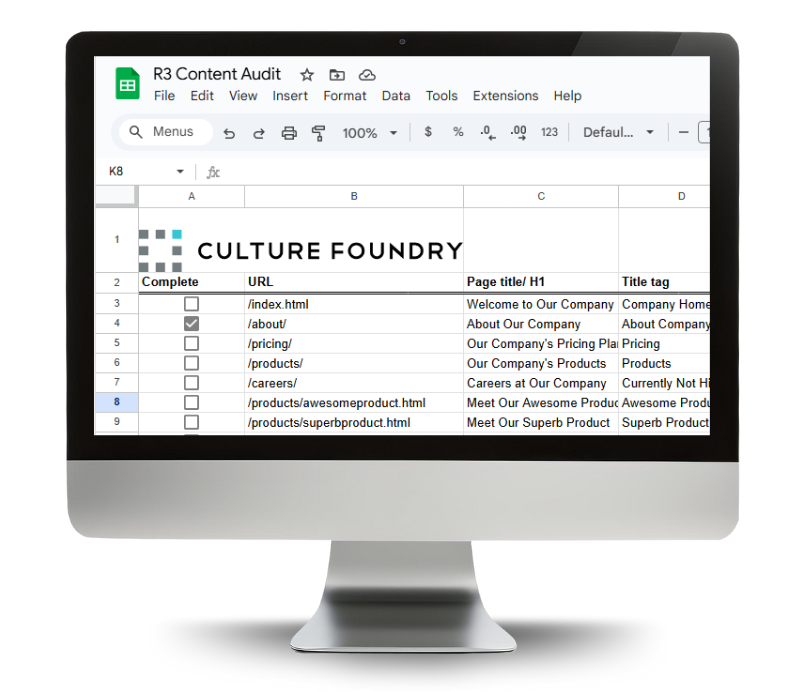
Download the R³ Content Audit Template — our free Excel content readiness tool can help you organize, evaluate, and plan your content for a smoother redesign.