
If 2024 and 2025 taught marketing leaders anything, it’s this:
The website is no longer a marketing asset; it’s a system your business runs on.
As we look toward 2026, the shift becomes even more dramatic. The organizations winning right now aren’t the ones with the prettiest sites or the best tech stacks; they’re the ones who adapt fastest, build sustainably, and make decisions grounded in data and user behavior, not guesswork. Leadership now expects digital systems to deliver clear, trackable results. The website is no longer there just to support marketing.
Marketing leaders tell us the same thing again and again: the landscape keeps getting more complex, and clarity is harder to create.
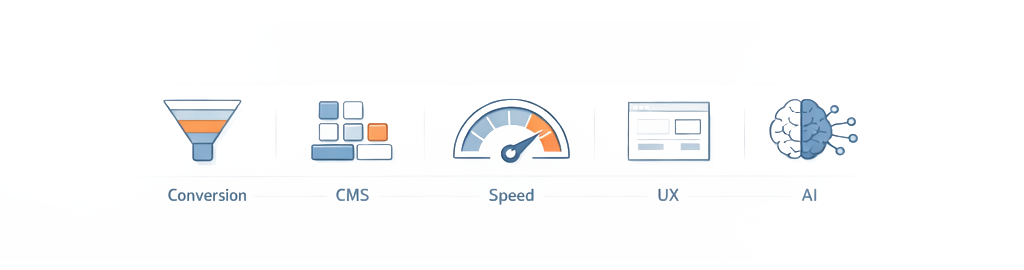
Here are the five web and marketing trends we’re watching closely at Culture Foundry, including one prediction we expect will change the marketing landscape.
1. “Conversion Architecture” Is Replacing Traditional Web Design
For years, redesigns revolved around aesthetics: layouts, colors, branding updates. But as budgets tighten and leadership demands measurable ROI, websites built for performance, not decoration, are taking the lead.
We’re seeing a surge in:
- UX optimization services
- Conversion rate optimization for websites
- Clearer CTA frameworks
- Page-level journeys built around real user data
Modern marketing teams need predictable outcomes: higher conversions, cleaner attribution, fewer leaks in the funnel.
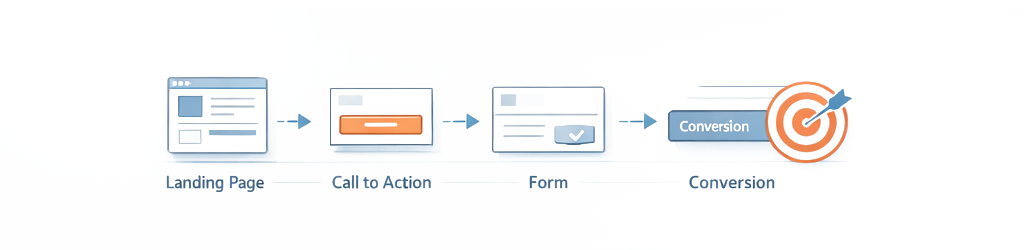
Redesigns are now seen as revenue systems. 2026 is the year redesigns become conversion systems. The most effective redesigns will begin with studying how users actually behave on the site. This strategic step with shape the projects success.
2. The Great CMS Modernization Wave (Especially: Drupal to WordPress Migrations)
Legacy CMS fatigue has reached a tipping point and the scales seem to be tipped to WordPress. According to W3Techs, WordPress is used by 60.4% of all websites whose content management system is known. This represents 43.2% of all websites globally.
Organizations stuck on inflexible or unsupported platforms (hello, Drupal 7) are being forced to modernize, and they’re choosing WordPress.
Why?
- Enterprise WordPress development is now robust, secure, and scalable. It’s become much more than your neighbors blog about birdwatching.
- Marketing leaders want websites they own. They don’t have time to be trapped behind developer bottlenecks
- WordPress is easy to integrate with common CRMs, analytics, AI tools, and marketing automation systems
- A modern CMS reduces technical debt, one of the top concerns of IT stakeholders
2026 will bring a widespread CMS modernization cycle, with organizations moving away from legacy platforms toward systems that offer more stability and autonomy. We are already seeing Drupal to WordPress migrations, driven by a desire for stability, speed, and marketing autonomy.

What’s shifting is the expectation that marketing teams should be able to move at the speed of the business, without waiting on development resources for every update.
3. Speed and Performance Become “Non-Negotiable” for Growth Teams
Core Web Vitals, once something only developers worried about, are now a board-level conversation. Based on multiple industry performance datasets, just over half of all websites currently meet Google’s Core Web Vitals thresholds. While this number is improving, it still leaves a large portion of sites below modern performance expectations. This gap highlights why speed and user experience remain strategic priorities for 2026.
Performance issues (slow load times, unstable pages, bloated scripts) directly impact:
- Conversions
- Lead quality
- SEO
- Ad costs
- Brand perception
- Revenue
A study by LiquidWeb found that 12% of business owners lose monthly revenue due to poor website performance, with an average annual impact of 15% of revenue.
Marketing leaders are waking up to a simple truth: If your site is slow, it negatively impacts every other marketing effort.

In 2026, website performance optimization will be considered a growth lever. We’re already seeing more organizations prioritize:
- Improving website site speed
- Finding a better hosting infrastructure
- Ongoing website support and maintenance
- Automated QA systems
Speed is becoming the new differentiation, and performance is now a brand signal. Slow equals untrustworthy, and this isn’t just a technical challenge; it’s a perception challenge. A slow site signals operational friction long before a user reads a word.
4. The Rise of “Experience-Led Marketing” (Where UX = Growth Strategy)
This trend has been quietly gaining traction, but 2026 will push it into the mainstream:
More and more, the user experience is doing the heavy lifting in your marketing strategy, often outweighing things like brand colors, social posts, or even your ad budget.
If your website is hard to edit, hard to navigate, hard to understand, or hard to trust, your marketing ROI will always be capped.

We’re seeing more and more teams invest in:
- UX testing
- Information architecture
- Accessibility-first design
- Design systems
Marketing leaders who once saw UX as a design concern now see it as the key to unlocking a predictable pipeline. 2026 is the year UX stops being a “nice to have” and becomes a required discipline.
5. AI Is NOT Replacing Websites — It’s Making Bad Websites Obsolete
We’re watching this one closely, and it’s the opposite of what some in the industry are saying:
AI won’t replace websites. But AI will expose which websites should no longer exist.
Search, chat interfaces, and AI-driven discovery are reshaping how people find information. G2 found that enterprise buyers now rely more on software review sites and AI search than traditional web research.
Users (and the agentic agents working on their behalf) will no longer tolerate:
- Slow websites
- Confusing navigation
- Content that isn’t authoritative
- Poor mobile experiences
- Generic brand messaging
- Sites with broken forms or unclear CTAs
AI tools surface the best experiences, not all experiences.
This means:
- Strong websites become more valuable
- Weak websites disappear from the buyer journey entirely
Businesses and marketers who treat their website as an operational system will have a competitive advantage.
Teams that keep patching an outdated site may not notice the slow loss of visibility, trust, and pipeline until it reaches critical mass.
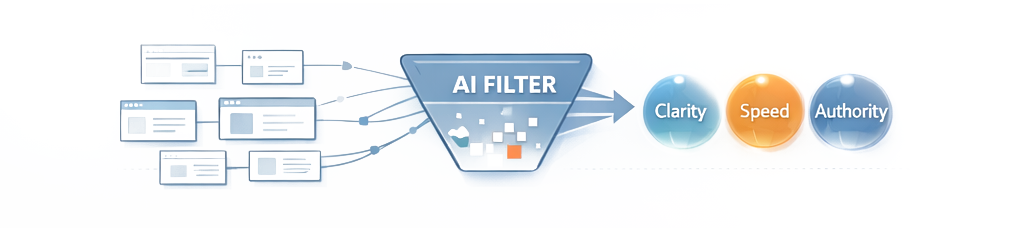
AI rewards clarity, speed, and authority, and ruthlessly filters out everything else. 2026 will be the year AI becomes the great filter of digital experiences.
What This Means for Marketing Leaders in 2026
Here’s what this means for your team, regardless of which platform or partners you use.
✔ You need a website built for performance, UX, and conversion
✔ You need a CMS your team can actually use
✔ You need the technical foundation IT trusts
✔ You need clarity, speed, and proof of ROI
✔ You need momentum that’s fast, measurable, repeatable
All of these trends point to the same reality:
Your website is now the most measurable, most adaptable, and most business-critical part of your marketing strategy.
The teams that invest early will ride a wave of compounding gains. The teams who wait may find it harder to stay visible and influential in the buyer journey, not because of competitors, but because the expectations of modern users and AI-driven discovery continue to rise.