
You’ve heard the pitch by now. AI has changed everything about building on the web. You can generate a landing page in minutes, draft a month of content before lunch, and spin up three homepage concepts while you finish your coffee.
The barrier to building has genuinely dropped, and the speed is real.
But here’s what gets lost in the excitement: building was never the hardest part.
Deciding what to build, making the pieces hold together, and knowing when it’s actually done has always been where the hardest work happens. AI can accelerate that process, but it cannot replace judgment.
If anything, it raises the stakes, because it removes some of the natural checkpoints that used to force teams to slow down and think.
Here’s the short version:
- AI has dramatically lowered the barrier to producing websites, content, and digital experiences
- Faster production does not remove the need for strategy, prioritization, and ownership
- The biggest risk is no longer whether teams can create something, but whether they are creating the right thing
- Strong constraints make AI more effective by keeping speed connected to outcomes
- The future belongs to teams who combine better tools with better decision-making
Why AI Website Projects Get Stuck in Endless Iteration
Here’s what we keep seeing.
AI rarely produces something unusable. It produces something, and then teams keep iterating without stepping back to ask if it is actually solving the right problem.
You generate a homepage. You tweak it. You add a section. You regenerate. You try another layout. Three weeks later, you’re twelve versions deep with no clear sense of whether you’re closer to a site that actually drives leads, or just deeper into the process.
That’s the trap. AI makes it easy to keep going without forcing the moments that actually matter: stopping, reassessing, and deciding. Without someone owning scope and priorities, fast tools do not necessarily create progress. They create motion.
And motion without direction is exactly where projects drift, budgets leak, and timelines quietly slip.

Why AI Can’t Replace Website Strategy
AI is very good at responding to a prompt, but it is not responsible for defining the system that prompt is part of.
It can help you explore priorities, organize ideas, evaluate options, and move faster through possibilities. What it cannot do is be accountable for the decision.
AI does not own your business goals. It does not have to defend the budget, manage the launch date, align stakeholders, or decide when a tradeoff is worth making.
Someone still has to do that. Someone has to translate a broad goal like “the site needs to support our growth” into a defined scope, connect that scope to actual pages, workflows, content needs, and dependencies, and keep the entire effort pointed toward the outcome that matters.
That work has not gone away. AI has shifted the most important work from production to decision-making.
A Quick Example
I ran into this myself recently. I had an idea for a new dashboard, and with AI I could describe the outcomes I wanted, generate pieces of it, and iterate on layouts and data views incredibly quickly.
And then I hit a wall.
I could keep producing versions, but I didn’t have a scoped picture of what the dashboard actually needed to be. I was jumping between outcomes, features, and edge cases with nothing tying them together.
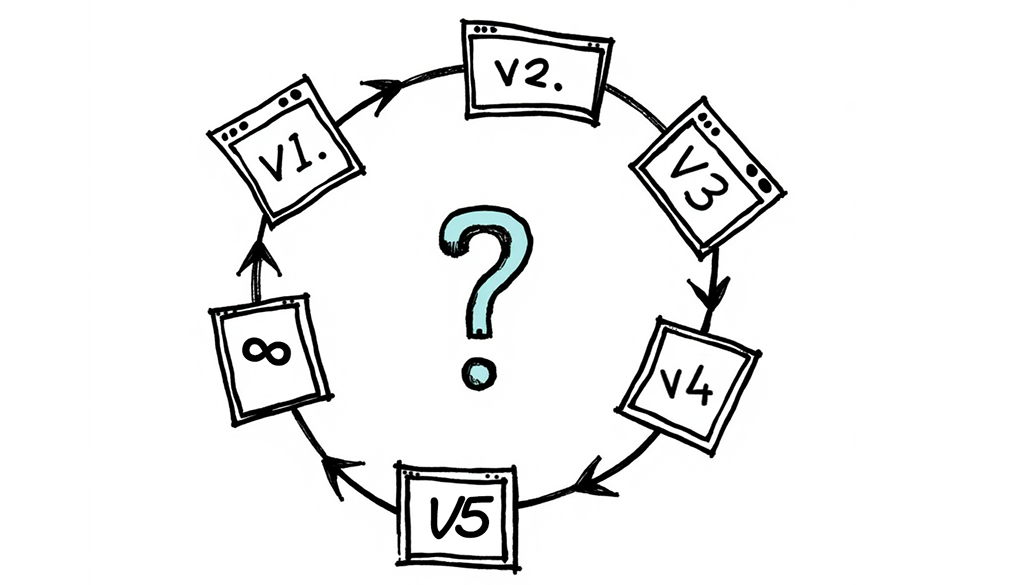
It was easy to keep building. It was much harder to step back and define what mattered, what belonged in phase one, and what “done” looked like. The connective tissue was missing.
Now picture that same dynamic on a website redesign with a brand at stake, a real budget, a launch date, and a leadership team watching. The cost of building fast in a direction you haven’t defined goes up quickly.
Why Website Strategy Matters More in the Age of AI
One of the biggest misconceptions right now is that more flexibility leads to better outcomes. Usually, the opposite is true.
AI performs best with clear constraints: defined inputs, known goals, and a thoughtful structure. So does a website project. So does a team.
Clear scope, clear priorities, and honest decisions about what’s in and what’s out are not bureaucracy that slows you down. They are what keep speed from accelerating the wrong work.
Because that’s the real risk. Without direction, AI doesn’t just help you move faster; it helps you move faster toward the wrong thing.
Where the Real Value Moves
If building is easier and faster now, where does the value actually sit? In direction, ownership, and connecting ideas to outcomes.
It sits with someone who can hold the 30,000-foot goal and the on-the-ground details together until the thing is real and working.
That’s the job we do, and it’s why “we’ll just use AI” rarely replaces a real partner on a project that matters.
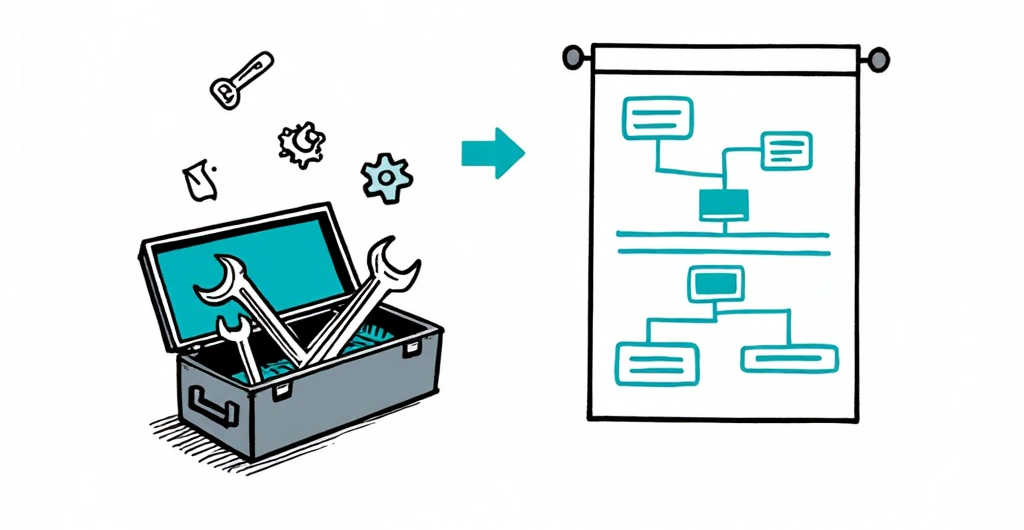
The tools can generate, accelerate, and expand what is possible. Someone still has to own the scope, prevent the project from spiraling, decide what success looks like, and make sure all that speed actually moves your numbers without becoming one more thing your team has to project-manage.
This pattern is not new. Technology writer Nicholas Carr made a similar version of this argument in the Harvard Business Review back in 2003. AI is the latest example, but teams have been promised for years that the next tool would remove complexity. Whether it was a better page builder, a more flexible CMS, or a faster way to publish, the promise has always been the same: the tool will solve the complexity. The tool matters, but the outcome still depends on whether the system around it supports how the team actually works.
When NYRA Bets came to us, their marketing team couldn’t update a single landing page without scheduling around an outside vendor’s developers in another time zone. They had tools, but they did not have ownership.
We didn’t start by jumping into the build. We started by understanding their workflows, constraints, and what the team actually needed from the site, then rebuilt the experience to put control back in their team’s hands.
The landing-page updates that followed drove a 28% lift in new registrations.
Culture Foundry always comes up with an idea of how to suit our needs. Every concern is met and we’re never told ‘we can’t do that.’
— Jennifer Bayer, Director of Marketing, NYRA Bets
That role isn’t shrinking in the age of AI. It’s becoming the whole game.
The Question Worth Asking Early
If you’re bringing AI into your website or content work, and you should, start with one question:
Do we have clarity on what we’re trying to build, or are we counting on speed to figure it out as we go?
The difference shows up fast. One path gets you a website that serves the business. The other gets you twelve versions and a launch date that keeps moving.
If you’d like a second set of eyes on how to structure that work, or where AI genuinely creates value in a website project versus where it just creates motion, that’s exactly the kind of conversation we love having.