
Page builders are optimized for speed of launch. Growth-focused marketing teams need speed of optimization. Those are not the same thing, and a fast launch doesn’t guarantee fast growth.
For VPs and Directors of Marketing inside growing organizations, the website isn’t a design project. It’s a lead engine. A brand platform. A measurable growth asset.
After rebuilding a number of marketing-driven WordPress sites, we’ve seen the same pattern: page builders feel empowering at launch, but they often introduce long-term constraints that quietly erode ROI, inflate rebuild costs, and make your team hesitant to touch anything.
This isn’t a debate about whether page builders work. It’s about whether they work when your website powers your sales funnel, and what happens to revenue, reporting, and team confidence when they don’t.
Why Page Builders Win Early
Let’s start with balance. Page builders exist for good reasons:
- Fast implementation
- Lower upfront cost
- Visual editing without developers
- Quick campaign or microsite deployment
For startups, short-lived initiatives, or teams without a long-term roadmap, that flexibility can be perfectly reasonable. But for marketing leaders responsible for:
- Lead generation
- Brand credibility
- CRM integration
- Conversion optimization
- Performance reporting
Speed of assembly is only the beginning.
Where Page Builders Break at Scale
Across mid-market organizations, we see the same pattern: what feels empowering at launch becomes limiting during growth. The constraints aren’t obvious on day one. They compound quietly, and by the time they’re visible, they’re expensive.

1. Architecture Debt That Shows Up In Your Budget
When you use a page builder, you’re editing a layer on top of WordPress. Think of it like trying to repaint your house while it’s covered in holiday decorations. Your house is still there, but now you have a tangle of lights, wires, and extension cords to work around.
Over time, that tangle makes every project more frustrating and more expensive. Small changes may require developer time to reverse-engineer inconsistent layouts. Editors may become increasingly frustrated by load times, inconsistent styling and lack of design standards. Campaign landing pages diverge from the main site. And when you’re finally ready to evolve the site with a new brand, new messaging, or new strategy, you discover you can’t update 200 pages without rebuilding most of them by hand.
That’s not just a technical problem. That’s also a budget and time problem. A site that needs to be rebuilt every two years isn’t efficient. It’s a compounding liability.
2. Performance Decay That Hurts Lead Generation
The drag-and-drop nature of page builders makes things easier on you as an editor. But they’re also adding extra code behind the scenes: markup, scripts, and styling that your visitor’s browsers have to process before anything loads. This slows down Time to Interactive and Largest Contentful Paint, two metrics that are part of Google’s Core Web Vitals score, and directly tied to where your site appears in search results.
Individually, these seem like minor technical concerns. But collectively, they degrade the performance of your lead engine:
- Slower load times push visitors to competitors
- Core Web Vitals slip, dragging down organic traffic
- Conversion rates decline because of the poor user experience
- Higher bounce rates mean more wasted ad spend
- SEO erosion makes it harder and more expensive to stay visible
3. Optimization Bottlenecks That Slow Your Team Down
Websites aren’t like magazines. You don’t publish them and immediately start planning for the next one. They’re living, breathing, growing extensions of your company. Websites need to be constantly updated, and marketers will always need to:
- Test CTAs
- Refine messaging
- Adjust conversion paths
- Integrate CRM logic
- Launch new campaign structures
- Report clearly on performance
But with loosely structured layouts and inconsistent modules, optimization becomes difficult. People are afraid of breaking high-performing pages. Design drift increases as one-off pages become more common. Analytics become harder to interpret. A/B testing gets messy because there’s no consistent baseline.
What was meant to reduce dependency ends up increasing hesitation. Your team knows the site needs work, but nobody wants to be the one who breaks it. So nothing gets done. The gap between your site’s potential and actual performance keeps widening.
4. Brand Erosion Through a Thousand Small Fixes
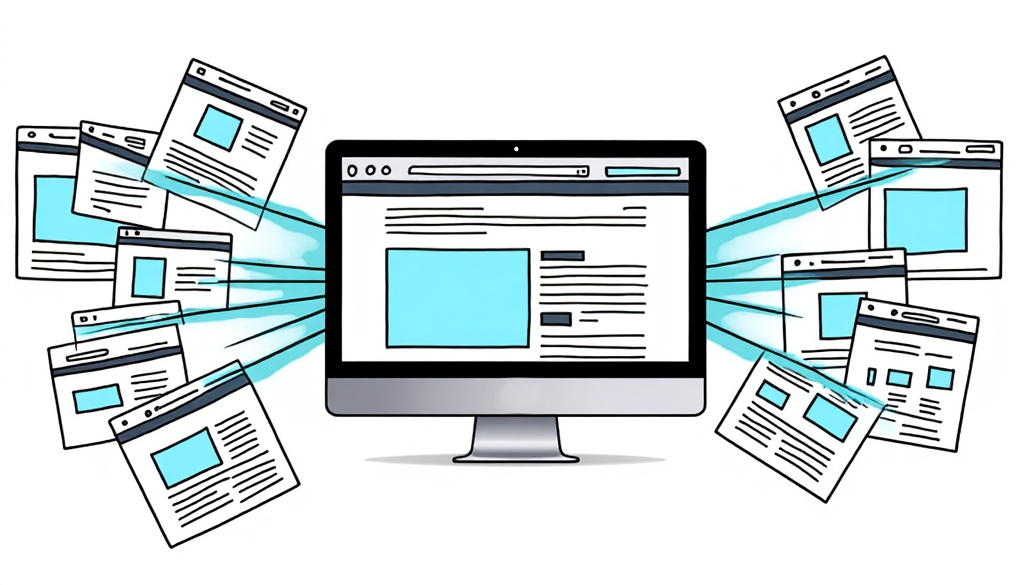
The larger your organization, the more likely it is that multiple stakeholders will have editing access. Without guardrails, every quick spacing change here, font variation there, and one-off custom components quietly chips away at brand consistency. Over time, the site stops feeling strategic. It feels patched together. Visitors feel it, even if they can’t articulate why. And when leadership asks why the site doesn’t feel as strong as it did at launch, there’s no single culprit. There are hundreds of them. Design systems should be easy to follow, not easy to deviate from.
The Real Risk Isn’t Speed. It’s Sustainability.
Most marketing leaders we speak with share similar concerns:
- Is my site actually generating leads, or just traffic?
- Will it launch on time and on budget?
- How much of my team’s time will this consume?
- Will I have to rebuild in two years?
- Can we prove the website is working?
Page builders only solve one of these questions: speed to launch. Everything else, from lead generation to platform sustainability, team confidence and success signals, requires intentional structure built in from the start.
What WordPress Done Right Actually Looks Like
Here’s where we want to be clear: the solution isn’t more complexity. It isn’t more developer dependency. And it isn’t more rigidity. It’s sound architecture by design.
The solution is a structure that creates safer speed. Your team can move faster because the guardrails are in place, not in spite of them.
Instead of layering a visual builder on top of WordPress, a well-built site can use WordPress’s native Gutenberg block editor with a library of structured, reusable components branded specifically for your brand and your goals. The difference is meaningful.
1. Reusable Blocks Instead of Free-Form Layouts
With a page builder, every page is essentially built from scratch. Editors drag elements around, make visual judgments, and the result varies from page to page. With structured blocks, your team works from a defined set of approved components, like hero sections, CTAs, feature cards, or testimonials, that are already designed, already on-brand, and already performing.
In practice, this means:
- Adding a new landing page takes hours, not days. And it looks right the first time
- When you update your brand voice or visual style, changes propagate across the site automatically rather than requiring manual fixes on every page
- Team members can edit confidently because the blocks themselves enforce the guardrails. It’s hard to break something that’s designed not to break
This is what “structure creates speed” actually means. The blocks do the heavy lifting so your team doesn’t have to.
2. Clean Content Structure That Protects Your Investment
In a site built with a page builder, your content and your design are tangled together. Change one, and the other can break unexpectedly. This is why simple updates like refreshing a section layout often require a developer to untangle things first.
In a well-architected WordPress site, content and presentation are kept separate. Your copy lives in structured fields. Your design lives in components. They connect cleanly, which means:
- You don’t have to rebuild 200 pages when your messaging evolves. Update once, and the change flows through
- Redesigns become upgrades, not reconstruction projects
- New CRM integrations or personalization features can be added without breaking what already works
- Your site can grow with your business rather than holding it back
- Editors are enabled and empowered to build content without frustration.
This isn’t a technical detail. It’s the difference between a site that is built to last and one that needs replacement every eighteen months.
3. Performance Built In, Not Bolted On
A well-built WordPress site doesn’t fight performance. It’s architected around it. Pages load only what they need. Markup is minimal and intentional. Core Web Vitals stay strong because the foundation supports them. What this means for your business:
- Organic traffic improves because Google rewards fast, well-structured sites
- Ad spend works harder because visitors who arrive actually stay and convert
- You’re not constantly fighting to maintain performance
4. Analytics and Reporting You Can Actually Trust
One of the most underappreciated costs of a page builder site is the toll it takes on measurement. When page structures are inconsistent, analytics tools struggle to track patterns reliably. A/B testing is harder to set up and harder to interpret. Conversion attribution gets messy.
With structured components and clean architecture, your reporting tells a coherent story. You can trust the data. You can run meaningful tests. You can show leadership exactly how the site is performing and why: a very different conversation than shrugging at a dashboard full of noise.
“Won’t This Make Us More Dependent on Developers?”
This is a common concern, and it’s a fair one. The promise of page builders was freedom from developer dependency. The idea of moving to a more structured approach can feel like going backwards.
Here’s the reality: page builders don’t eliminate developer dependency. They defer it. Every time something breaks, every time the site slows down, every time a campaign needs a layout that doesn’t quite fit the template, you need to go back to a developer, often urgently and expensively.
Properly structured WordPress does the opposite. It front-loads the developer investment to build a component library that’s designed for your team to use independently. Once it’s in place:
- Stakeholders can build new pages without writing a line of code
- Content updates are genuinely self-service
- Developers are brought in for new capabilities, not to fix preventable problems
- You spend less time managing your website and more time using it
The goal isn’t less developer involvement. It’s smarter developer involvement. You’re investing upfront in a system that pays dividends for years, rather than spending reactively on things that shouldn’t have broken in the first place.
When Page Builders Make Sense
To be clear, page builders aren’t inherently wrong. They may be appropriate when:
- Budget is extremely constrained
- The site is temporary
- There is no optimization roadmap
- Lead generation is not mission-critical
They become a strategic liability when:
- The website drives revenue
- There is an active conversion rate optimization (CRO) strategy
- CRM and automation integrations are required
- The site must last
- Leadership expects measurable ROI
That distinction is strategic, not technical. And it’s worth making before you commit to a platform, not after you’ve spent eighteen months on one.
If You’re Feeling the Strain
If your current site feels:
- Slower than expected
- Hard to update confidently
- Increasingly complex
- Difficult to measure
- Or fragile under optimization pressure
It may not be a marketing problem. It may be an architectural one. And that’s solvable, with the right structure.
When your website is built to perform, the experience changes for everyone. The site generates measurable leads. Your team edits confidently without fear of breaking things. Performance data tells a clear story. Stakeholders see results instead of explanations. And for the first time in a while, you’re not managing every detail or chasing answers. You have a platform you can trust and a partner who owns it with you.
That’s what WordPress done right actually looks like.
Want to see where your current site stands? Talk to Culture Foundry — we’ll help you figure out whether the foundation is the issue and what it would take to fix it.