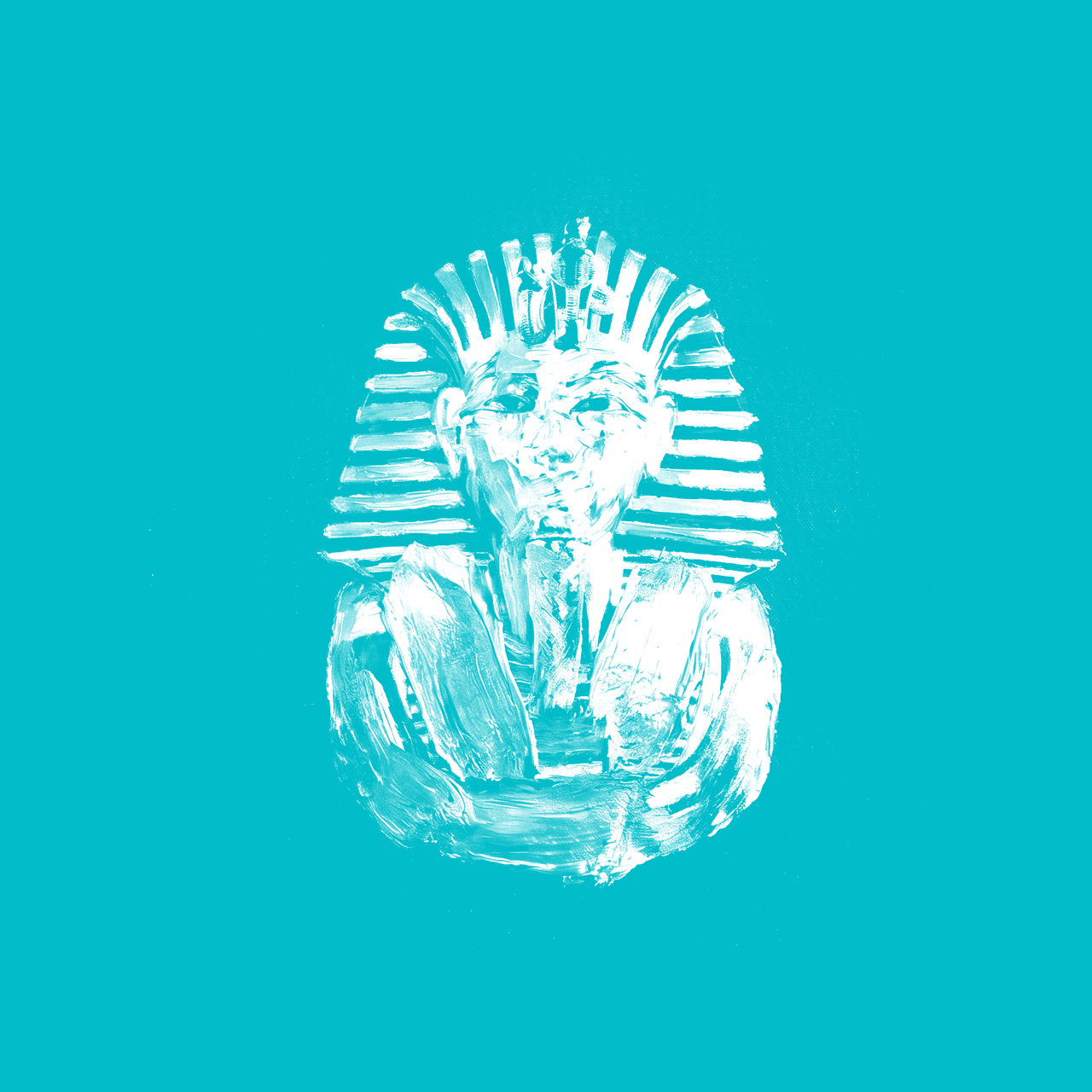

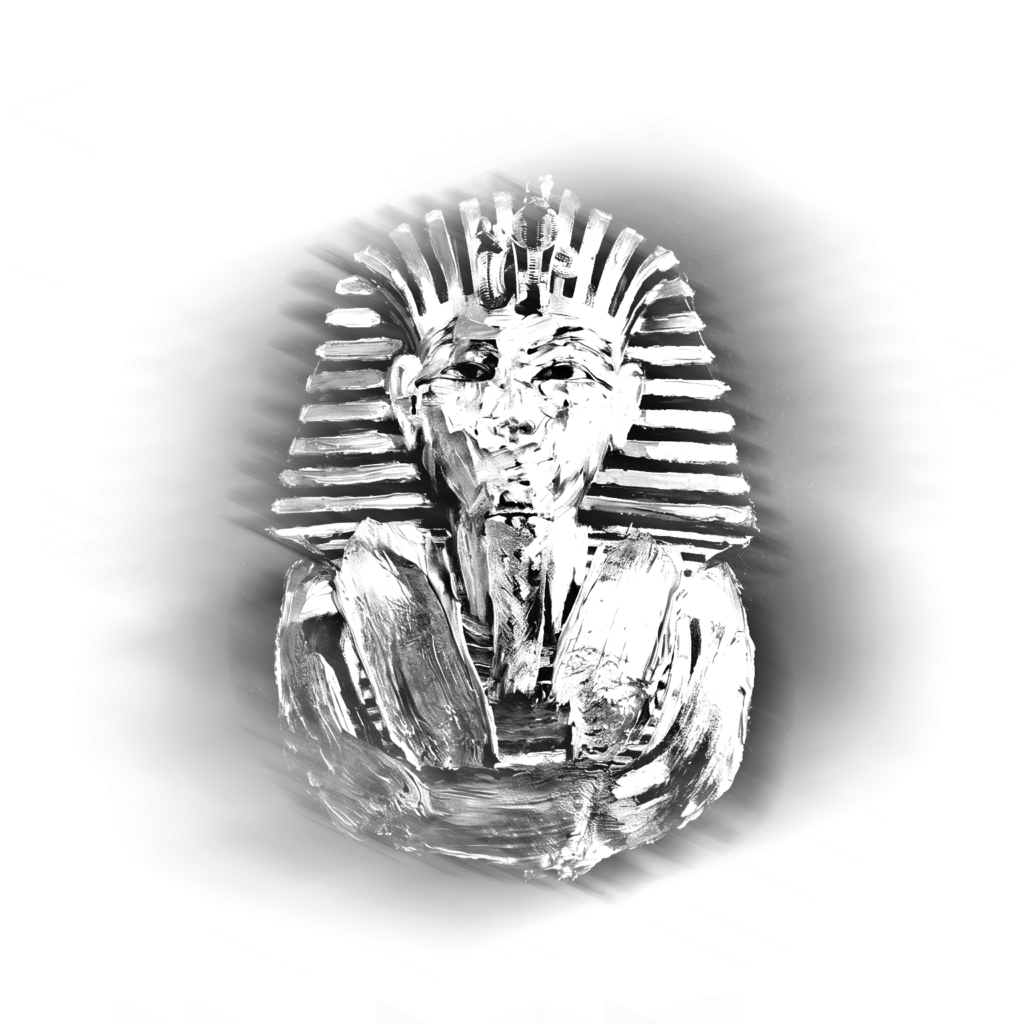
The most famous artifact in the world, Tutankhamun’s death mask, currently hovers behind bulletproof glass in a grand room in the Grand Egyptian Museum in Giza, Egypt.
In 1922, British archaeologist Howard Carter made history by discovering the tomb of Tutankhamun in Egypt’s Valley of the Kings. Unlike nearly every other royal burial site in Egypt, Tutankhamun’s tomb lay undisturbed through 3,000 years of grave-robbery. When Carter finally breached the innermost burial chamber, he was met with a breathtaking trove of thousands of pristine artifacts—and the gleaming, artisan husk of a child Pharaoh’s preserved corpse.
Tutankhamun was a minor pharaoh who ruled during the New Kingdom period from 1332 to 1323 BCE. He was crowned a god. He married his half-sister. He died at the age of 19. He was buried in a small tomb that took thousands of years to unearth.
As the Grand Egyptian Museum’s centerpiece, his mask remains under strict security and climate control. Millions of visitors marvel at his dazzling inlay of solid gold, lapis lazuli, quartz, and obsidian.
Design Is an Artifact
Early in my career, back in the dark ages when all screen design happened in Photoshop, there was a particular hill on which I was willing to die. It was a hill where every single layer was meticulously classified, grouped, and named. No “Layer 124”. No “Group 68”. No “Rectangle 17”. What sort of animal wouldn’t name a background layer, “Background”? Wouldn’t a sentient being reject “Line 17” and call it “Separator” instead?
It took me nearly a decade to understand that the time- and dollar-devouring futility of a well-named, well-grouped source file languished unprofitable on the cutting room floor. That I was an organizational zealot. That I believed good design and good layer names insisted upon each other.
While I now consider many of these lofty notions to be varieties of nonsense, modern design software is aggressively aligning itself with these rigidities, pressuring us to engage in even more rejectable, more expensive chores. We are now confronted with the concepts of reusable components, component variants, layout engines, tokens, variables, and responsive statefulness. At the same time, we are necessarily robbed of expression—of unexpected brush strokes, of unanticipated filters, of useful accidents.
Ideas drive design, not systems. Systems drive engineering, not raw ideas. Great design—its imagination, expression, and transformation—does not begin as any sort of system. Great design begins with inspiration and surprise. It lurks within the unpredictable, within the mistake, within the spur of the moment. There is no layer name, no group name, no well-formed color token, for great design. Great design is a chaotic mix of “Layer 119”, “Text 14”, “Vector 314”, and innumerable, unannotated adjustments.
And yet, we spend (and expend) hours engineering the document anyway. We build a meticulous digital monument. We treat our Figma file as an object with permanent historical gravity. We treat it like an Artifact.
The Tyranny of Product
Design is 20% inspiration and 80% rejection. Rejection is the reality that we must reckon with.
Our project and account managers sell things like “iterations” and “hours” while we grind forever toward inevitable feedback like, “I don’t like that font,” when it’s actually their core brand font, or, “the text is too small,” when they’re viewing a desktop mockup on their phone in their car in Los Angeles traffic. There is no meaningful layer name for, “We don’t like it. Show us something different.”
What good is a reusable, variant-rich, auto-layout component in the face of absolute rejection?
This is where the illusion cracks. King Tutankhamun’s death mask survived 3,000 years in the dirt because it was forged of solid gold, lapis lazuli, and obsidian. It was a true Artifact—an immutable, physical sovereign. Your design file is not. Your design file is a cheap imitation of an Artifact. It is an intricate, over-engineered shell of 32-bit pixels.
Imagine your meticulously crafted nest of well-named, auto-layout frames—perfect 24px padding, perfect 8px horizontal spacing—devolving, in development, into 11px of padding and random spacing in odd units. This is when Figma becomes less than stone. This is when Figma becomes less than mud. This is when Figma becomes less than artifact—a buried tabula of mistakes that only the designer recalls and can directly link to.
Rejection and Misinterpretation rob Design of its assumed tyranny. Only Product is the tyrant. Only Product trumps design. Because Product is the machine that dictates reality. Product is the code that ships, the metrics that scale, and the constraints that survive the wild. Without the cold, unyielding tyranny of execution, a design is just an expensive, dead object trapped in a digital tomb.
So I remain an old, stubborn dog. A designer whose files are completely empty of layer names, richly tuned components, complex states, or any other eminently-rejected, eminently-unrealized artifacts of an eminently frustrating craft.
Addendum: The Chisel of the Large Language Model
And yet, a new spectre haunts our canvas: the blunt apparatus of agentic coding.
We are rapidly entering an era where human developers no longer manually misinterpret our desperate precision. Instead, AI agents read our Figma files directly, translating structure into code quicker than thought. Suddenly, the chaotic mess of “Layer 119” and “Vector 314” isn’t just an untidy habit—it is bad context. The machine demands perfect auto-layout, pristine variables, and immaculate nesting, transforming our design documents from passive, pixelated shells into active, functional code. Structure becomes paramount, but only because the inhuman tool knows only inhuman language.
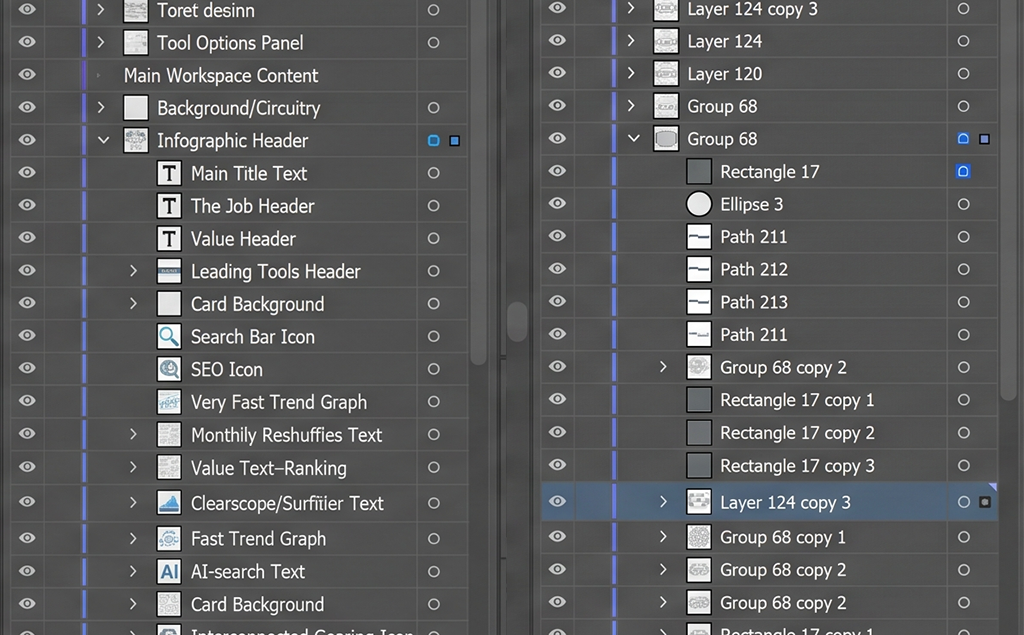
Luckily, we can just prompt an LLM to rename our layers for us.
Only Product Survives
Every project has elements that get rejected, revised, and reworked along the way to launch. That’s normal. What’s not normal is ending up with something that doesn’t look, sound, or feel like your brand. Tutankhamun’s death mask survived 3,000 years because nobody looted the tomb. Work with Culture Foundry, and your product will reach launch intact, not reinterpreted at every handoff between brief and build.