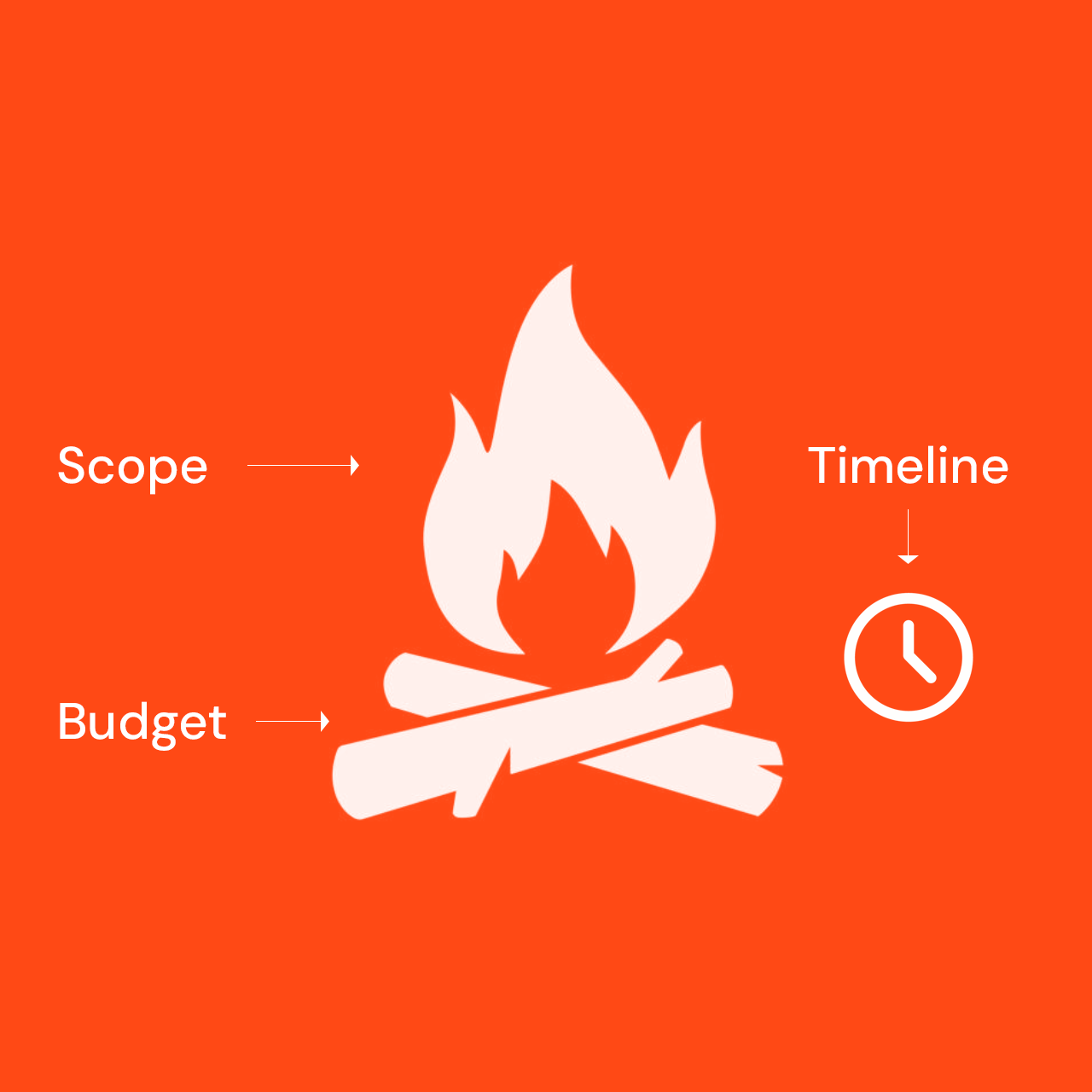

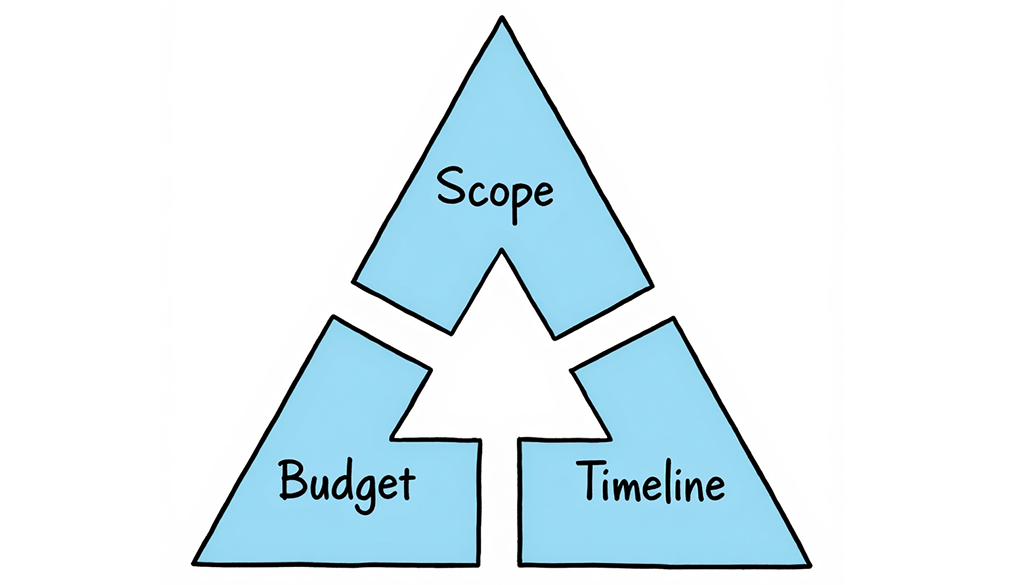
At Culture Foundry, we talk about the project triangle (scope, budget and timeline) early and often, not because it is novel, but because it is one of the most consistently misunderstood parts of website projects.
Scope, budget, and timeline are always connected. That is not a theory, it is a constraint.
And yet, most projects still run into the same tension. Everyone wants the site to do more, cost less, and launch sooner. That would be ideal, but it is not how successful projects actually work.
Most teams have heard some version of this before. The issue is that when pressure builds, those constraints stop being treated as real, and projects begin to drift.
In this post, we’ll break down the real tradeoffs between scope, budget, and timeline, why they are often mismanaged, and how making these decisions explicit early leads to better outcomes, stronger partnerships, and more predictable delivery.
Here are the core ideas:
- Scope, budget, and timeline are connected, not independent
- Expanding scope impacts cost, timing, or both
- Compressing a timeline introduces delivery and quality risk
- Overprotecting budget can create larger long-term costs
- Strong projects succeed by making tradeoffs visible and intentional
- Avoiding these conversations leads to frustration, overages, and loss of trust
If your team is planning a website redesign or major digital initiative, early clarity on these tradeoffs is one of the most important decisions you can make.
1. Scope, Budget, and Timeline Are Always Connected (Whether You Plan for It or Not)
Scope, budget, and timeline do not operate separately. They influence each other from day one and require active management throughout the project.
This is the first thing most teams agree on and the first thing that tends to get ignored when expectations begin to expand.
- A larger scope requires more time, more budget, or both
- A smaller budget requires reduced scope, an extended timeline, or simplification
- A shorter timeline requires reduced scope, increased investment, or increased risk
These are not signs of a struggling project. They are simply the normal conditions of doing complex work.
At Culture Foundry, we assume scope will evolve as ideas develop and priorities become clearer. That is part of doing thoughtful work. The difference is that we manage that evolution explicitly.
Projects do not fail because scope changes. They fail because scope changes without acknowledgment of impact.
2. Most Teams Get It Wrong by Treating Them as Fixed
This is the most common failure pattern we see.
Scope expands, expectations grow, and priorities shift, but budget and timeline are still treated as immovable. That disconnect creates pressure across the entire team and makes it harder to make clear, confident decisions.
It is easy to understand why this happens. Stakeholders want momentum, teams want to be accommodating, and no one wants to be the blocker. But this is where small decisions begin to compound.
What starts as “just one more feature” or “that seems small” often leads to:
- timeline drift
- budget overage
- unclear priorities
- slower decision-making
- increased team stress
- reduced confidence in the project
The issue is not ambition. Ambition is necessary. The issue is treating ambition as if it has no cost.
3. Scope Changes Are Never Isolated
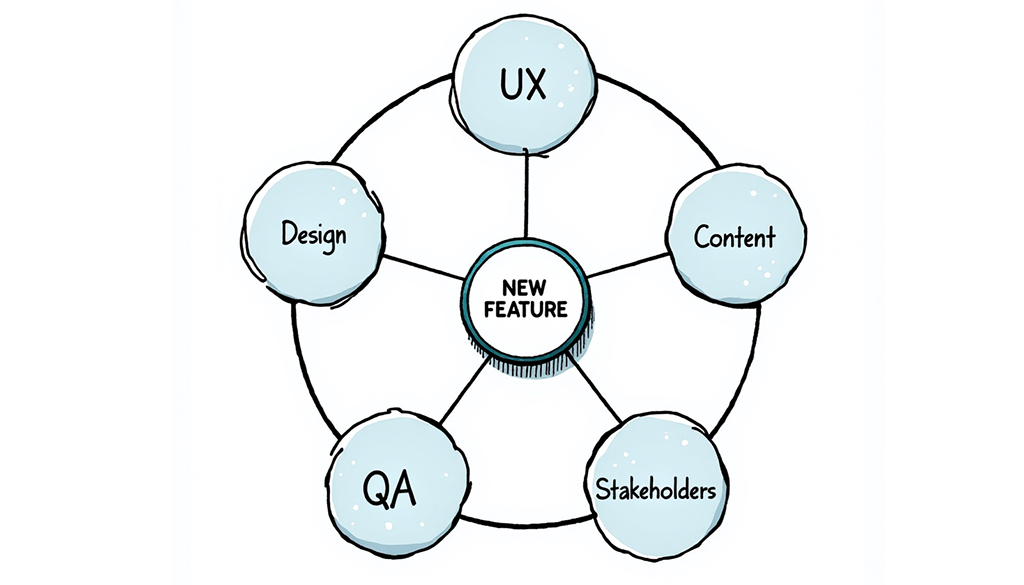
Every addition to scope carries downstream impact.
A new feature is not just a development task. It typically requires additional UX thinking, more design states, more content planning, more QA, more stakeholder review, and more documentation or support. It also introduces opportunity cost, often pulling time and attention away from previously approved priorities.
Even small additions create ripple effects across the system.
This is why we push for impact-based conversations, not just idea-based ones.
At Culture Foundry, a healthy scope conversation includes:
- What does this add to the outcome?
- What does it require across teams?
- What does it displace if constraints remain the same?
- Is this required for launch, or better suited for a later phase?
- Is the value worth the tradeoff?
Without this level of clarity, scope decisions are not really decisions. They are simply accumulation.
4. Speed Introduces Risk, Not Just Efficiency
Speed is often necessary. Many projects have real deadlines that cannot move.
However, accelerating a timeline without adjusting scope or resources changes how the project operates.
We see this show up in predictable ways, including reduced time for strategic thinking, rushed design decisions, limited QA, less documentation, more reactive communication, and a higher likelihood of preventable issues.
Faster delivery is absolutely possible, but it always requires tradeoffs.
That might mean simplifying what is included in launch, increasing budget to support more parallel work, or tightening decision-making and approvals. What does not work is compressing time while expecting the same level of depth, quality, and flexibility.
That is a recipe for disappointment.
5. Cutting Budget Often Moves Cost Instead of Eliminating It
Budget discipline is important, but short-term cost control is not the same as long-term efficiency.
We often see teams make decisions that reduce upfront spend while quietly creating more work later. These decisions might include cutting planning too early, simplifying foundational systems, relying on fragile or temporary solutions, or deferring structural improvements.
Those choices tend to resurface in the form of rework, performance issues, inconsistent templates, difficult content management, SEO and accessibility gaps, and post-launch fixes that ultimately cost more than doing the work properly the first time.
At Culture Foundry, we focus on helping teams understand the difference between reducing cost and shifting cost. The lowest upfront number is not always the best long-term investment.
6. The Best Teams Make Tradeoffs Transparent
The strongest projects are not the ones that avoid constraints. They are the ones that surface them and then manage them clearly and consistently.
That usually includes defining clear launch priorities, separating must-haves from future-phase work, documenting the impact of scope changes, being transparent about timeline risk, aligning stakeholders around shared outcomes, and revisiting decisions before they compound.
This is where we see the biggest difference in project success.
Project teams often hesitate to surface tradeoffs early. No one wants to be the one to say that a request will impact timeline or budget, so those conversations get deferred.
The problem is that the pressure does not go away. It compounds.
By the final stretch of a project, timelines are tight, budgets are strained, and teams are already operating at full capacity. What should have been a straightforward conversation earlier becomes a high-stakes moment, when everyone is fatigued, margins are thin, and frustration is high. This is when delivery starts to feel harder than it should.
We see this pattern often in digital projects.
At Culture Foundry, we take a different approach. We surface tradeoffs early and revisit them consistently, so decisions are made with full context and shared understanding. The result is a clearer path to the finish line, stronger alignment across teams, and a delivery process that holds up under pressure.
When tradeoffs are explicit, teams move faster, decisions become easier, and expectations stay aligned. When they are not, friction builds quietly until it surfaces as delays, overages, or frustration.
What This Looks Like in Practice
Strong project conversations shift from:
“Can we include this?”
to more strategic questions like:
- What matters most for launch?
- What can wait until phase two?
- What does this change in budget or timeline?
- Where are we introducing risk?
- Are we making a strategic decision or reacting to pressure?
- How could this distract from higher-priority work?
These are better questions because they lead to better decisions.
The goal is not to keep scope, budget, and timeline perfectly fixed. The goal is to make informed decisions that protect delivery quality, team trust, and long-term outcomes.
Planning a Website Project? Start Here.
If you’re evaluating a redesign or planning a new build, two resources worth reviewing before you start:
- Website Redesign Planning — how to structure the planning phase so scope is defined, not assumed
- 5 Tips for Project Success — a practical path to ensure next project to succeed
And if you want to talk through what your project actually requires — scope, timeline, investment, and what a realistic path forward looks like — we’re straightforward about that from the first conversation.
No pressure. No assumptions. Just clarity.
At Culture Foundry, this is a core part of how we work. We believe strong projects are built on clear expectations, transparent tradeoffs, and shared ownership of decisions. That approach is what keeps projects on track and partnerships strong.